1.Cheesy Onion Focaccia Bread
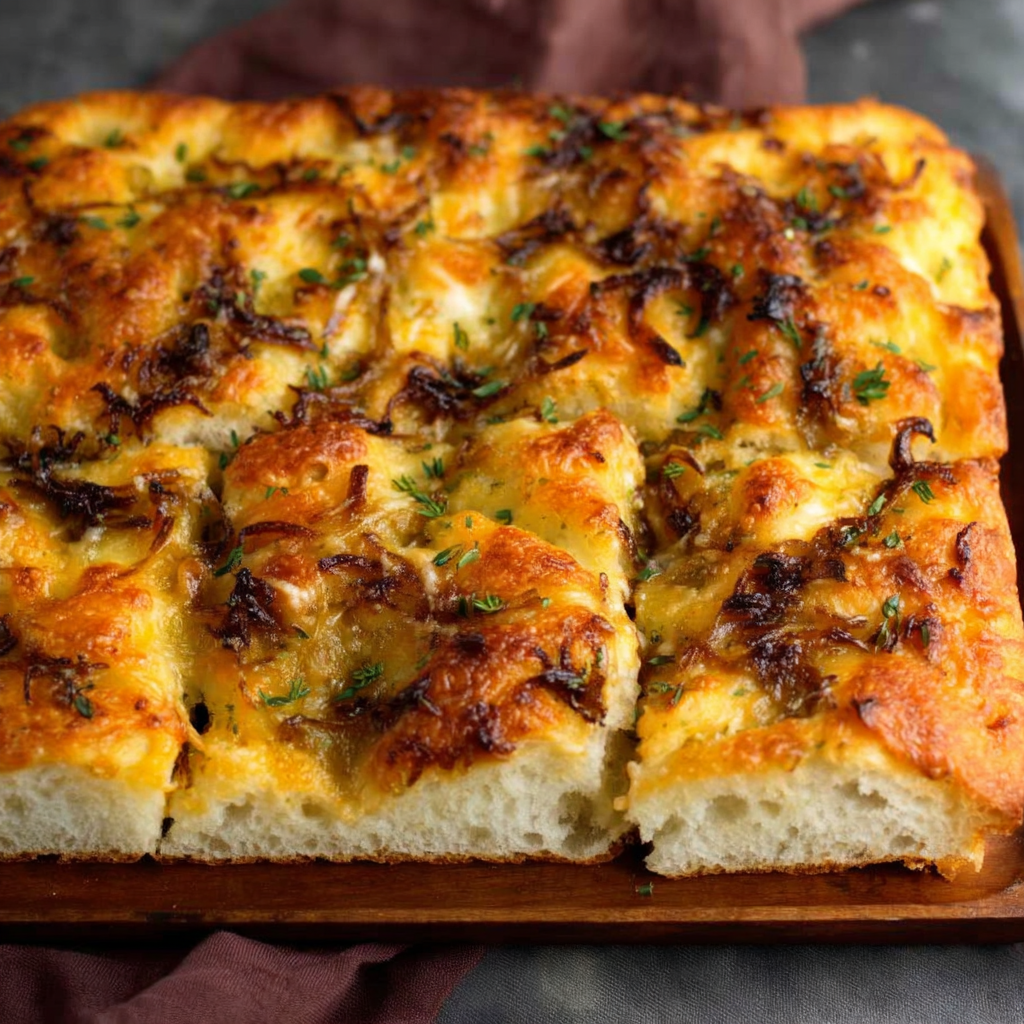
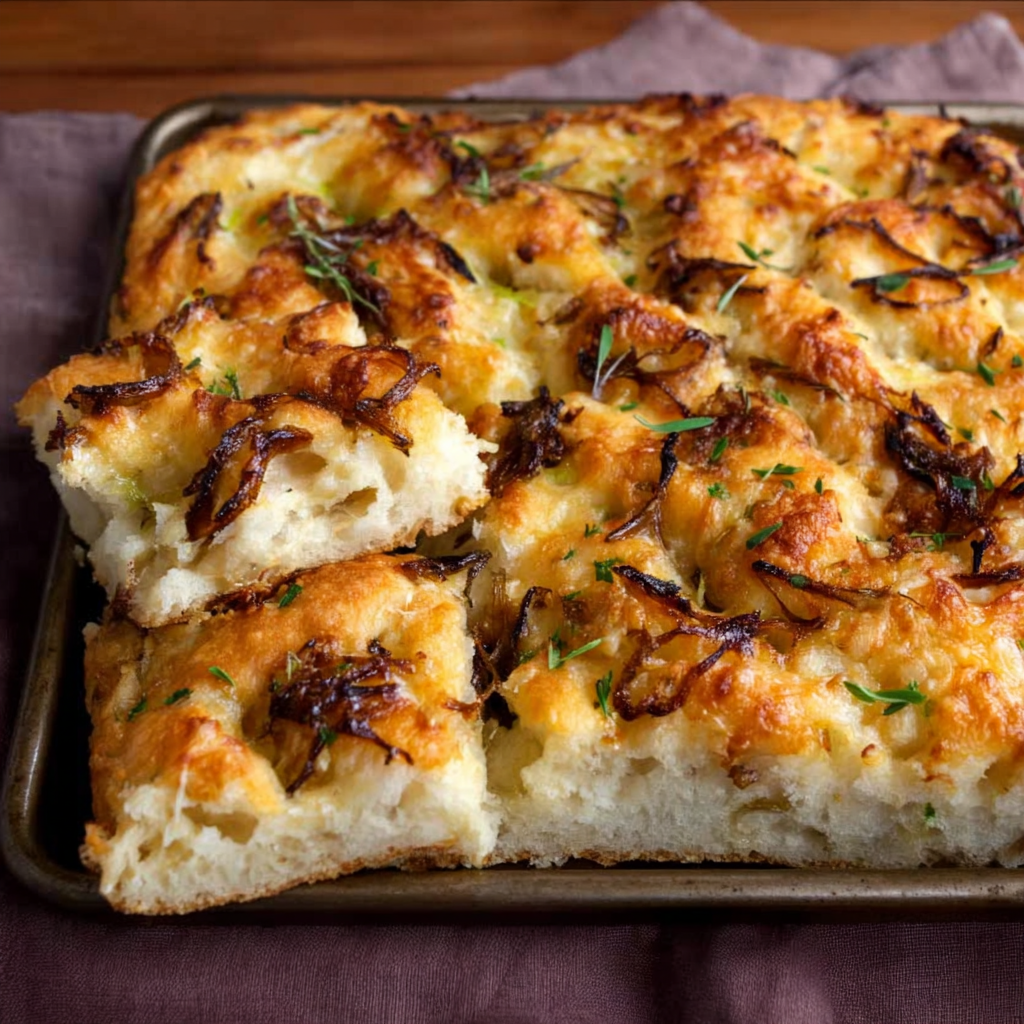
Focaccia bread is a traditional Italian flatbread known for its soft, airy texture and golden, olive oil-kissed crust. When layered with cheese, caramelized onions, garlic, and rosemary, it transforms into a rich, savory bread that’s both rustic and indulgent. This upgraded version uses a cast iron skillet, which delivers perfectly crispy edges and a tender, flavorful center.
Unlike typical breads, this cheesy onion focaccia doesn’t require complicated steps or equipment. The simplicity of olive oil, herbs, and slow-cooked onions blends beautifully with gooey mozzarella and sharp Parmesan. It’s the kind of bread that stands out at family dinners, elevates game day spreads, or pairs effortlessly with warm soups and crisp salads.
Using a cast iron skillet enhances the baking process by retaining heat evenly and creating that signature golden crust. The skillet acts like a mini-oven, giving your focaccia structure and crunch without sacrificing moisture. Pairing this with the depth of caramelized onions brings out sweet, earthy notes that contrast the salty richness of the cheeses.
Perfect for dipping into tomato bisque, serving as a base for sandwiches, or tearing apart straight from the pan, this cheesy onion focaccia is versatile and crowd-pleasing. Whether you’re making it for a weekend lunch or a holiday appetizer, it’s a recipe that’s easy to follow and impossible to forget. For a better understanding of focaccia’s history and structure, you can check out what focaccia is and how it differs from other flatbreads.
The best part? You can customize it with your favorite toppings, herbs, or extra garlic. Once you’ve made this once, you’ll want to try different versions, like those found in this collection of focaccia topping ideas, turning your kitchen into a small artisan bakery.
2. What Makes This the BEST Cheesy Onion Focaccia?
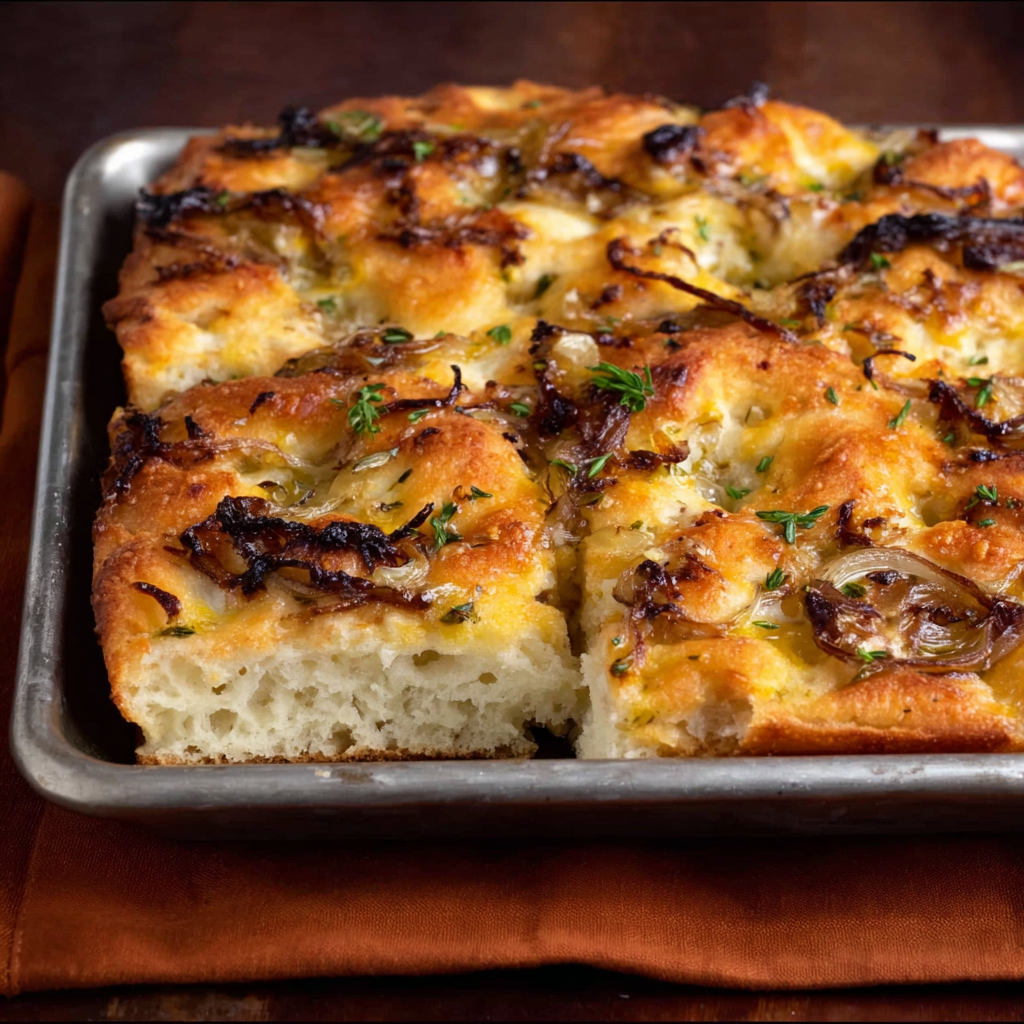
What sets this cheesy onion focaccia bread apart from the rest isn’t just the ingredients—it’s the balance of texture, flavor, and technique. Each element works together to create a perfect bite: soft and airy inside, crispy on the edges, and loaded with rich, savory toppings.
Here’s what makes this version stand out:
-
Two Cheeses for Depth: Using both mozzarella and Parmesan creates a blend of melty, stretchy richness and sharp, salty bite. Learn more about the flavor profile of mozzarella and Parmesan cheese, and how they complement each other on bread.
-
Caramelized Onions for Sweetness: Slowly cooked onions add a deep, jammy flavor that contrasts beautifully with the saltiness of the cheese. This step brings an extra layer of complexity and makes the bread feel more like a meal than a side.
-
Infused with Garlic and Rosemary: The addition of fresh or dried rosemary and minced garlic adds herbaceous, earthy aromas. These classic flavors evoke traditional Italian breads, making each slice aromatic and comforting. If you’re looking for variation, browse garlic rosemary bread inspiration for other topping combinations.
-
Cast Iron Skillet = Crispy Edges: Baking in a well-oiled skillet creates a golden, crunchy crust that’s hard to achieve on a standard baking sheet. It traps heat and forms a crusty edge that crackles when sliced—similar to styles found in cast iron bread recipes.
-
Olive Oil for Moisture & Flavor: Generous drizzles of olive oil help the dough stay soft inside while forming a rich, toasted exterior. It also enhances the flavor of the dough and contributes to the overall mouthfeel.
This version of focaccia is more than bread—it’s a full sensory experience: crisp edges, pillowy center, and rich cheesy-onion topping that makes each bite unforgettable. Try topping your version with ingredients from this board of cheesy focaccia ideas to personalize it even more.
3. Tools & Equipment You’ll Need
To create the best cheesy onion focaccia, having the right tools on hand ensures the process is smooth and successful. While this recipe is beginner-friendly, using specific equipment like a cast iron skillet can dramatically improve the results.
Here’s everything you’ll need:
-
Cast Iron Skillet (9×13 or Round): The heavy base of a cast iron skillet provides even heat and crisp edges. This is key to achieving the golden crust. A standard 9×13 pan can also be used, but for extra crunch, the cast iron is ideal. Explore more about cast iron cookware and why it works so well for bread.
-
Mixing Bowls: You’ll need a large bowl for mixing the dough and smaller ones for prepping ingredients like onions and cheese.
-
Measuring Cups and Spoons: Accurate measurements are crucial for baking. Make sure you have dry and liquid measuring tools.
-
Wooden Spoon or Stand Mixer with Dough Hook: If kneading by hand, a wooden spoon works well. If you prefer less effort, a stand mixer with a dough hook saves time.
-
Spatula or Dough Scraper: Helpful for folding and transferring sticky dough, especially on floured surfaces.
-
Skillet vs. Baking Sheet Comparison: A baking sheet will work for focaccia, but it won’t deliver the same edge crispiness. The heat retention in cast iron gives you the iconic texture found in artisan-style focaccia, often seen in Pinterest bread boards.
If you’re new to baking, don’t worry. These tools are likely already in your kitchen. And if you don’t have a skillet yet, it’s worth investing in one—it’ll change the way you cook everything from bread to breakfast.
4. Key Ingredients Breakdown
Understanding what each ingredient brings to this cheesy onion focaccia helps you appreciate the flavors and textures. Here’s a breakdown of every component and why it matters.
-
All-Purpose Flour (3 ½ cups): This is the base of your dough. It gives the bread structure and chewiness. Make sure to spoon and level the flour for accurate measurement.
-
Active Dry Yeast (2 ¼ teaspoons): Yeast is what makes the dough rise and become light and airy. Proofing it with warm water and sugar activates it. Fresh yeast is key for fluffy results.
-
Warm Water (1 ½ cups at 110°F): Activates the yeast and hydrates the flour to form the dough. It should feel warm but not hot to the touch.
-
Sugar (1 tablespoon): Feeds the yeast and enhances browning in the crust.
-
Salt (1 teaspoon): Essential for flavor. Salt also strengthens the dough structure and balances the sweetness from the onions.
-
Olive Oil (¼ cup plus more for greasing): Infuses flavor, helps with crisping the crust, and keeps the crumb moist. It’s a must-have in authentic focaccia recipes like those highlighted in focaccia topping ideas.
-
Yellow Onion (1 large, thinly sliced): The star ingredient. Slowly cooking the onion releases natural sugars and turns it golden brown. Learn the science behind caramelization to master this step.
-
Mozzarella Cheese (1 cup, shredded): Offers stretch and creamy texture. Opt for low-moisture mozzarella to prevent sogginess. More info on mozzarella.
-
Parmesan Cheese (½ cup, grated): Adds a salty, nutty bite. Works as a flavor booster and browns beautifully. See details on Parmesan cheese.
-
Rosemary or Italian Seasoning (1 teaspoon): Brings classic Italian herb flavor. Fresh rosemary is especially aromatic and pairs well with the onion and cheese. Check out garlic rosemary bread inspiration.
-
Optional Garlic (minced or roasted): Adds depth and punch. Garlic blends with the onion and herb notes for a fuller flavor profile.
These ingredients come together to create a cheesy onion focaccia that’s rich, savory, and satisfying—every bite layered with complexity and comfort.
5. How to Caramelize Onions Perfectly
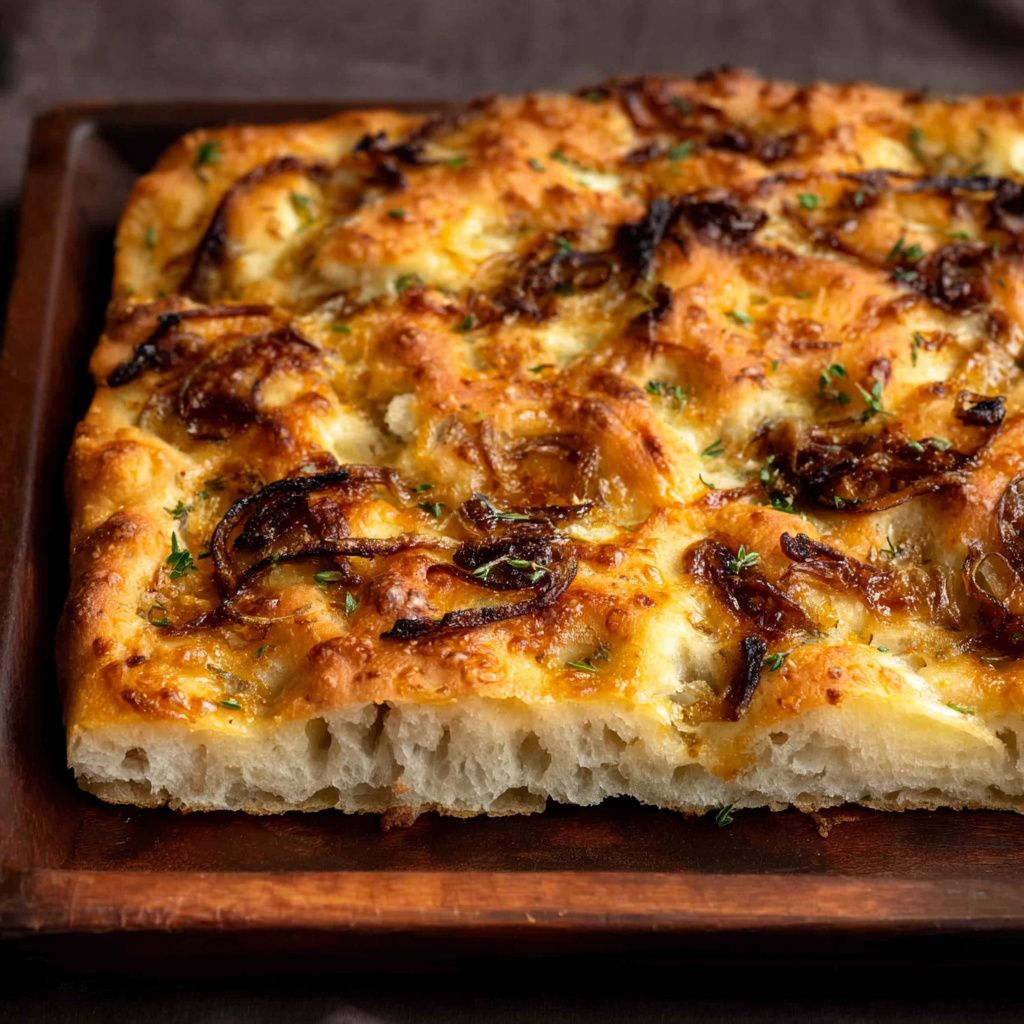
The flavor foundation of this bread lies in the caramelized onions. Doing it right is essential to capturing the bread’s rich and sweet-savory essence.
Here’s how to do it:
-
Use Low Heat: Set your stove to medium-low. Cooking onions slowly prevents burning and brings out their natural sugars.
-
Add Oil: Start with a tablespoon of olive oil. You can also use a mix of oil and butter for added flavor.
-
Slice Evenly: Thin slices cook more uniformly. Use a sharp knife or mandoline for consistency.
-
Cook for 10–15 Minutes: Stir frequently to avoid sticking. The onions should be golden brown, soft, and slightly translucent—not burnt.
-
Optional Touch: Add a pinch of sugar or salt to boost caramelization, but it’s not necessary. Water or broth can be added in small splashes to deglaze the pan.
-
Storage Tip: Cooked onions can be made ahead and stored in the fridge for up to 3 days. You can also freeze them in small portions.
Mastering this step gives the focaccia a gourmet quality. This method is often seen in caramelized onion recipe inspirations, which show how versatile and essential onions are in cooking.
6. Dough Preparation: Step-by-Step
Making the dough is simple and doesn’t require a bread maker or complicated techniques. Follow these steps to get a perfect focaccia base every time.
-
Activate the Yeast: In a large bowl, combine warm water, sugar, and yeast. Stir gently and let sit for 5–10 minutes until the mixture becomes foamy. This confirms the yeast is alive.
-
Mix the Dough: Add flour, salt, and olive oil to the yeast mixture. Stir with a wooden spoon or dough hook until a sticky dough forms.
-
Knead the Dough: Transfer it to a floured surface and knead for 5–7 minutes. The dough should become smooth and elastic. If it’s too sticky, sprinkle in a little flour.
-
First Rise: Place the dough in a greased bowl. Cover with a towel or plastic wrap and let it rise in a warm spot for about 1 hour, or until doubled in size.
-
Prepare for Second Rise: Punch down the dough gently and transfer it to a well-oiled cast iron skillet. Press it out to fit the pan. Cover again and let it rise for another 20–30 minutes.
This step-by-step process ensures the bread is light, fluffy, and full of air pockets—the signature texture of authentic focaccia seen in traditional focaccia baking styles.
7. Assembling the Focaccia
Now that the dough has risen twice, it’s time to add toppings and prepare the bread for baking. This step is where your focaccia takes on its final look and flavor.
-
Dimple the Dough: Use clean fingers to press deep dimples all over the surface. This traps olive oil and toppings, giving the bread its signature texture.
-
Add Olive Oil: Drizzle a generous amount over the top. Let it seep into the dimples for added flavor and moisture.
-
Spread Caramelized Onions: Evenly distribute the cooked onions across the top. Press them lightly into the dough so they stay in place while baking.
-
Add Cheese: Sprinkle mozzarella evenly, followed by Parmesan. This layering gives both meltiness and crunch.
-
Season: Add rosemary or Italian seasoning, plus garlic if using. This boosts aroma and flavor during baking.
Check out similar builds and designs on cheesy focaccia ideas for visual inspiration.
8. Baking in a Cast Iron Skillet
Time to bake your focaccia to golden perfection.
-
Preheat the Oven: Set it to 400°F (200°C). Make sure it’s fully heated before placing the skillet inside.
-
Bake Time: 20–25 minutes, or until the cheese is bubbly, the onions are caramelized further, and the edges are crisp and golden brown.
-
Check for Doneness: The bottom should be firm and golden when gently lifted with a spatula. If it’s pale, bake for another 3–5 minutes.
-
Cooling Time: Let it rest for at least 10 minutes. This helps the crumb set and makes slicing easier.
Baking in a skillet mimics artisan-style bread ovens, giving you texture and flavor close to bakery-quality loaves. You’ll find similar techniques on Pinterest boards for cast iron breads.
9. Serving Suggestions & Pairings
This cheesy onion focaccia shines on its own, but it also plays well with many dishes.
-
Soups: Serve with tomato basil, creamy mushroom, or roasted red pepper soup.
-
Salads: Pair with arugula and shaved Parmesan, Caesar salad, or spinach walnut salad for balance.
-
Game Day or Appetizers: Cut into squares and serve with dipping sauces like marinara, garlic aioli, or herbed olive oil.
It’s a crowd-pleaser that works for casual meals and special occasions. For more pairing inspiration, check out these focaccia-based spreads.
10. Variations to Try
Customize your focaccia with these delicious variations:
-
Add-Ins: Sun-dried tomatoes, olives, sautéed mushrooms, or roasted red peppers
-
Cheese Swaps: Gruyère, fontina, sharp cheddar
-
Spicy Kick: Crushed red pepper flakes, sliced jalapeños
-
Gluten-Free: Use a gluten-free flour blend and adjust hydration
Explore more flavor profiles and ideas via cheesy focaccia recipe collections.
11. Storage & Reheating Tips
-
Storing: Keep leftovers in an airtight container at room temp for 1–2 days or in the fridge for up to 4 days.
-
Freezing: Wrap tightly and freeze for up to 2 months.
-
Reheating: Use an oven at 350°F for 10 minutes or reheat in a skillet for crispy edges. Avoid microwaving—it softens the crust.
12. FAQs
Q: What cheese is best for focaccia?
A blend of mozzarella and Parmesan works best—mozzarella for meltiness, Parmesan for flavor.
Q: How do you keep focaccia from getting soggy?
Use low-moisture cheese, avoid overloading toppings, and bake in a well-preheated oven.
Q: Can you make focaccia dough ahead of time?
Yes, you can refrigerate the dough after the first rise for up to 24 hours.
Q: Do you need to refrigerate focaccia bread?
It’s not necessary if you’ll eat it within a day, but refrigerate if keeping longer.
Q: Why is my focaccia not fluffy?
This could be due to inactive yeast, not enough rise time, or overworking the dough.
The Best Cheesy Onion Focaccia Bread with Garlic and Rosemary

A golden, crispy-edged cheesy onion focaccia loaded with caramelized onions, melted mozzarella, and Parmesan, all infused with garlic and rosemary. Baked in a cast iron skillet for the perfect crust and fluffy interior, this focaccia is ideal for pairing with soups, salads, or served solo as a comforting snack.
- Author: Clara
Ingredients
- 2 1/4 teaspoons active dry yeast (1 packet)
- 1 1/2 cups warm water (about 110°F or 45°C)
- 1 tablespoon granulated sugar
- 3 1/2 cups all-purpose flour
- 1 teaspoon salt
- 1/4 cup olive oil, plus more for greasing and drizzling
- 1 large yellow onion, thinly sliced
- 1 cup shredded mozzarella cheese
- 1/2 cup grated Parmesan cheese
- 1 teaspoon dried rosemary or Italian seasoning (optional)
Instructions
In a large bowl, combine warm water, sugar, and yeast. Let sit for 5–10 minutes until foamy.
Add flour, salt, and olive oil to the yeast mixture. Stir until a sticky dough forms.
Transfer the dough to a floured surface and knead for 5–7 minutes until smooth and elastic. Place in a greased bowl, cover, and let rise in a warm place for 1 hour or until doubled in size.
While the dough rises, heat a bit of olive oil in a pan over medium heat. Add sliced onions and cook until soft and lightly golden, about 10–15 minutes. Set aside.
Once risen, punch down the dough and transfer it to a greased 9×13-inch baking pan. Press the dough out to fit the pan. Let it rise again for about 20–30 minutes.
Preheat the oven to 400°F (200°C).
Use your fingers to dimple the top of the dough. Drizzle with olive oil, then evenly spread the caramelized onions over the surface.
Top with mozzarella and Parmesan cheeses. Sprinkle with rosemary or Italian seasoning if using.
Bake for 20–25 minutes or until the bread is golden and the cheese is bubbly and slightly browned.
Let cool slightly before slicing and serving.
Notes
-
Always use warm water (not hot) to activate the yeast.
-
For maximum flavor, caramelize the onions slowly over low heat.
-
Customize with your favorite toppings like olives or roasted garlic.
-
Let the bread cool slightly before slicing to keep the crumb intact.
-
Baking in a cast iron skillet enhances crustiness, but a baking dish will also work in a pinch.