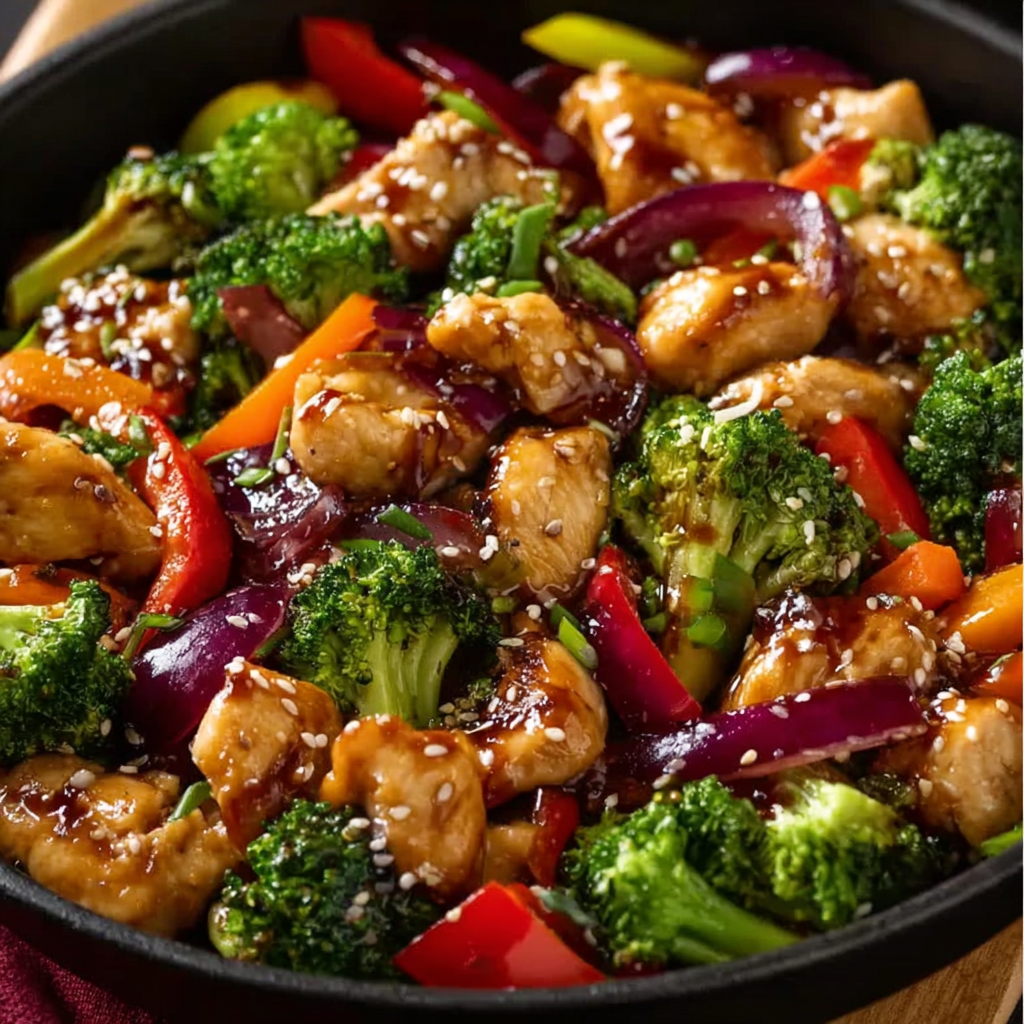
Craving something quick, easy, and bursting with flavor for dinner? This teriyaki chicken stir fry is your answer. With its bold, savory-sweet flavors and vibrant vegetables, it’s a dish that satisfies your takeout cravings without the wait or added sodium. Perfect for busy weeknights, this homemade stir fry brings together juicy chicken, crisp veggies, and a rich teriyaki glaze that clings beautifully to every bite.
Unlike takeout, this stir fry lets you control every ingredient. Whether you’re watching your sodium intake or want to load up on veggies, it’s completely customizable. The teriyaki sauce, made with ingredients like soy sauce, honey, rice vinegar, and fresh ginger, adds depth and authenticity without preservatives or additives. Learn more about the history of teriyaki sauce to appreciate the cultural roots of this popular flavor profile.
Even better, this dish is a great way to reduce food waste. You can easily swap in whatever vegetables you have on hand—perfect if you’re cleaning out your fridge or following seasonal produce availability. If you’re looking for more healthy weeknight dinner inspiration, check out these curated healthy dinner ideas on Pinterest that keep dinner exciting and fast.
Whether you’re a busy parent, a student short on time, or just someone who loves Asian-inspired meals, this stir fry is a go-to you’ll come back to again and again
Why You’ll Love This Teriyaki Chicken Stir Fry
There’s a reason why teriyaki chicken stir fry has become a go-to meal for so many households—it checks all the right boxes when it comes to flavor, convenience, and flexibility. Here’s why this dish stands out:
Quick and easy: From prep to plate, this recipe takes less than 30 minutes. That makes it ideal for busy weeknights when you need something satisfying without spending hours in the kitchen.
Healthier than takeout: Unlike most takeout versions, this stir fry is made with low-sodium soy sauce and uses natural sweeteners like honey or brown sugar. Plus, you get to control the oil, making it a cleaner alternative to greasy restaurant versions. Curious about the difference? Discover how stir-frying works with this guide to the stir-frying technique.
Loaded with nutrients: Thanks to a generous mix of vegetables like broccoli, carrots, and snap peas, this dish is packed with fiber, vitamins, and antioxidants. Explore more about the benefits of one of the star ingredients by learning about broccoli’s nutrition facts.
Easily customizable: Have extra mushrooms or baby corn? Toss them in. Want it spicier? Add sriracha or chili flakes. You can even swap out chicken for tofu, shrimp, or beef based on what you have.
Great for meal prep: This recipe holds up well in the fridge, making it perfect for preparing in advance. Check out these meal prep chicken ideas to keep your week flavorful and stress-free.
Family-friendly: The mild, slightly sweet sauce is a hit with kids and adults alike. Serve it over rice, noodles, or even cauliflower rice for a low-carb twist.
In short, this easy teriyaki chicken stir fry fits right into your weeknight routine—offering maximum flavor with minimum effort.
Ingredients Breakdown & Substitutions
This teriyaki chicken stir fry is built on simple, flavorful ingredients that you likely already have in your kitchen. Below is a breakdown of the key components and how you can adjust them to suit your preferences or dietary needs.
Chicken Options
Boneless, skinless chicken breast is lean and cooks quickly. It’s great for a lighter option.
Chicken thighs offer a juicier, richer flavor thanks to a bit more fat. Both work well in this dish.
Cut your chicken into bite-sized pieces to ensure even cooking and quicker stir-frying.
Vegetables
A classic mix of:
Broccoli florets
Red bell pepper, sliced
Carrots, thinly sliced
Snap peas or snow peas
These veggies add color, crunch, and nutritional value. But feel free to substitute with:
Mushrooms
Baby corn
Zucchini
Green beans
Bok choy
Using seasonal or leftover vegetables is a great way to reduce waste and add variety. For more inspiration, explore easy stir fry ideas that fit your pantry.
Sauce Ingredients Explained
The heart of this dish is the homemade teriyaki sauce. Here’s what goes into it:
Low-sodium soy sauce: The base of the sauce. You can use tamari or coconut aminos for a gluten-free option. Learn more about soy sauce and its role in Asian cooking.
Honey or brown sugar: Adds sweetness to balance the saltiness. You can also use maple syrup or agave.
Rice vinegar: Gives the sauce a slight tang. Apple cider vinegar works in a pinch.
Garlic and fresh ginger: Essential for bold, aromatic flavor. Discover more about using fresh ginger in cooking.
Sesame oil: Adds nutty depth. If unavailable, skip or use peanut oil.
Cornstarch + water slurry: Thickens the sauce to that classic glossy teriyaki texture.
Want to dive into homemade sauces? Explore homemade Asian sauce recipes for variations and additions. This customizable base is healthier and more flavorful than bottled versions.
Step-by-Step Cooking Instructions
Making teriyaki chicken stir fry is straightforward. Follow these simple steps for the best results:
Make the Sauce: In a small bowl, whisk together:
¼ cup low-sodium soy sauce
2 tablespoons honey or brown sugar
2 tablespoons rice vinegar
1 teaspoon sesame oil
2 minced garlic cloves
1 teaspoon grated ginger
Set it aside.
Cook the Chicken:
Heat 1 tablespoon vegetable oil in a skillet or wok over medium-high heat.
Add chicken pieces, season lightly with salt and pepper.
Cook for 5–6 minutes until browned and fully cooked.
Remove chicken and set aside.
Stir Fry the Vegetables:
In the same pan, add a bit more oil if needed.
Add broccoli, bell pepper, carrots, and snap peas.
Stir fry for 4–5 minutes until crisp-tender.
Combine and Simmer:
Return chicken to the pan.
Pour the teriyaki sauce over chicken and veggies.
Stir to combine and bring to a simmer.
Thicken the Sauce:
Mix 1 tablespoon cornstarch with 2 tablespoons water.
Add to the pan, stirring constantly.
Cook for 1–2 minutes until sauce thickens and coats everything.
Finish and Serve:
Top with chopped green onions and sesame seeds if desired.
Serve hot over rice, noodles, or cauliflower rice.
For best results, always use high heat when stir frying. Curious how stir-frying creates that signature flavor? Here’s an overview of the stir-frying technique and its quick-cook benefits.
How to Serve Teriyaki Chicken Stir Fry
This dish is highly versatile when it comes to serving options. Depending on your dietary needs or preferences, here are some ways to enjoy it:
Over rice: Steamed white jasmine rice or brown rice makes a perfect base.
With noodles: Serve with lo mein, udon, or rice noodles for an extra comforting meal.
Low-carb option: Use cauliflower rice or zucchini noodles for a lighter take.
This homemade stir fry is not only delicious—it’s nourishing too. Here’s what makes it a smart choice:
Lean Protein: Chicken breast or thighs provide high-quality protein to keep you full longer.
Vegetables: A mix of broccoli, carrots, and peppers adds antioxidants, fiber, and essential vitamins.
Lighter Sauce: Made with low-sodium soy sauce, natural sweeteners, and fresh aromatics, the sauce avoids preservatives and excess sugar.
Customizable Diet Options: Easily adaptable for gluten-free, low-carb, dairy-free, or high-protein diets.
Learn more about the nutritional power of veggies like broccoli to appreciate every bite.
Common Mistakes to Avoid
Even simple recipes can go wrong. Here are a few mistakes to avoid with this teriyaki chicken stir fry:
Overcooking the chicken: Leads to dryness. Remove as soon as it’s cooked through.
Undercooking dense veggies: Cut evenly and cook longer for broccoli or carrots.
Using watery sauce: Don’t skip thickening with the cornstarch slurry.
Overcrowding the pan: Causes steaming, not stir-frying. Cook in batches.
Avoid these, and your stir fry will be just as good—if not better—than takeout.
FAQs – People Also Ask
Can I use store-bought teriyaki sauce?
Yes, but homemade has fresher flavor and less sugar. If you do use bottled sauce, choose one low in sodium and without high fructose corn syrup.
What’s the best way to thicken teriyaki sauce?
Use a cornstarch slurry—mix equal parts cornstarch and water, then stir into the simmering sauce until thick.
How do I make this dish vegetarian?
Swap chicken for tofu or tempeh, and use vegetable broth if adding extra liquid. Add more veggies for bulk.
Can I use frozen vegetables in a stir fry?
Yes, but thaw and pat dry first to avoid excess moisture in the pan. Stir fry quickly to keep texture crisp.
What’s the difference between stir fry sauce and teriyaki sauce?Teriyaki sauce is sweeter and thicker, with flavors like garlic, ginger, and sugar. General stir fry sauces can be lighter or spicier, depending on the style.
Is teriyaki chicken stir fry good for meal prep?
Absolutely. It holds well in the fridge, reheats beautifully, and the sauce stays flavorful for days. Pair with rice or noodles for a full meal.