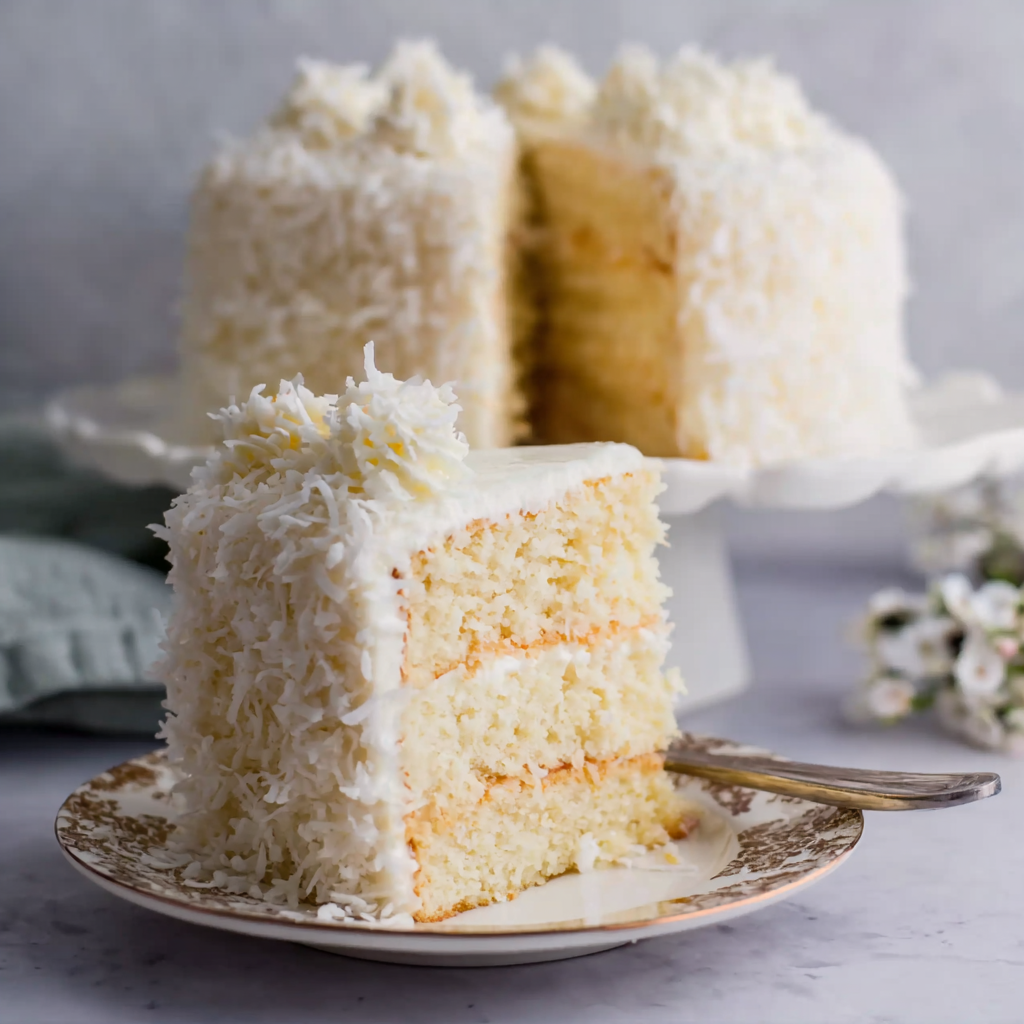
There is something timeless about a beautiful coconut layer cake set in the center of the table. It feels right at home at spring celebrations, family birthdays, holiday gatherings, and those weekends when you simply want to bake something a little extra special. With its soft, tender crumb and creamy coconut flavor in every bite, this cake brings a sense of comfort and celebration all at once.
This recipe is inspired by classic homemade layer cakes that feel both elegant and familiar. Coconut cakes have long been loved for their light texture and rich flavor, often becoming the dessert people remember most after a meal. This version keeps that nostalgic charm while focusing on what every home baker wants: moist cake layers, a smooth coconut frosting, and a finish that looks impressive without being difficult to make.

Why You Will Love This Coconut Layer Cake
A great coconut layer cake should deliver more than just sweetness. It should have a soft, moist crumb, a distinct coconut flavor that tastes natural rather than overpowering, and a frosting that complements the cake instead of weighing it down. This recipe checks every box.
The cake layers are rich but fluffy, thanks to a combination of butter, oil, and buttermilk. Butter brings classic flavor, while oil helps keep the cake moist for longer. Buttermilk adds tenderness and a subtle richness that balances the sweetness beautifully. Coconut milk and shredded coconut deepen the flavor, making this dessert taste like a true coconut cake from the very first bite.
Another reason this recipe stands out is its versatility. It is elegant enough for a celebration but simple enough for a weekend baking project. You can serve it as a birthday cake, a holiday dessert, or the centerpiece for a brunch or afternoon tea. It also holds up well when made ahead, which makes it practical for entertaining.
If you have been searching for the best moist coconut layer cake recipe, this is the kind of dessert that delivers old-fashioned charm with reliable results.
What Makes a Moist Coconut Cake So Special
Many coconut cakes look beautiful, but the real test is texture. Dry cake can ruin even the prettiest dessert. The secret to a moist coconut cake is building flavor and softness into every layer.
This recipe uses:
-
1 cup unsalted butter, softened
-
1/2 cup neutral oil
-
2 cups granulated sugar
-
4 large eggs
-
1 tablespoon vanilla extract
-
1 teaspoon coconut extract
-
3 cups all-purpose flour
-
1 tablespoon baking powder
-
1/2 teaspoon baking soda
-
1/2 teaspoon salt
-
1 cup canned full-fat coconut milk
-
1 cup buttermilk
-
1 cup sweetened shredded coconut
That blend gives the cake a balanced richness. The butter creates flavor, the oil locks in moisture, the eggs provide structure, and the coconut milk adds creaminess without making the batter heavy. The shredded coconut also helps create a fuller coconut taste and contributes a little texture that makes each slice even more satisfying.
When baked properly, the layers come out golden at the edges, soft in the center, and sturdy enough for stacking. The result is a cake that feels luxurious but still easy to slice and serve.
Ingredients for Coconut Layer Cake
For the cake layers, you will need:
-
1 cup unsalted butter, softened
-
1/2 cup neutral oil
-
2 cups granulated sugar
-
4 large eggs, room temperature
-
1 tablespoon vanilla extract
-
1 teaspoon coconut extract
-
3 cups all-purpose flour
-
1 tablespoon baking powder
-
1/2 teaspoon baking soda
-
1/2 teaspoon fine salt
-
1 cup canned full-fat coconut milk, well stirred
-
1 cup buttermilk, room temperature
-
1 cup sweetened shredded coconut
For the coconut frosting, you will need:
-
1 1/2 cups unsalted butter, softened
-
6 cups powdered sugar, sifted
-
1/4 cup canned full-fat coconut milk
-
1 teaspoon vanilla extract
-
1 teaspoon coconut extract
-
1/8 teaspoon fine salt
-
2 1/2 cups sweetened shredded coconut, for coating and decorating
Optional garnish:
-
1/2 cup toasted coconut flakes
-
Fresh berries for serving
These ingredients come together to create a cake that feels bakery-worthy while still relying on accessible pantry staples.
How to Make Coconut Layer Cake
Start by preparing your pans. Grease and line three 8-inch round cake pans with parchment paper. Preheat your oven to 350°F.
In a medium bowl, whisk together the flour, baking powder, baking soda, and salt. Set aside. In another bowl or measuring jug, stir together the coconut milk and buttermilk.
In a large mixing bowl, beat the softened butter, oil, and granulated sugar until light and fluffy, about 3 to 4 minutes. This step is important because it creates the base for a tender cake. Add the eggs one at a time, beating well after each addition. Mix in the vanilla extract and coconut extract.
Add the dry ingredients in three additions, alternating with the coconut milk mixture. Begin and end with the dry ingredients. Mix just until combined. Fold in the shredded coconut.
Divide the batter evenly among the prepared pans and smooth the tops. Bake for 23 to 28 minutes, or until a toothpick inserted in the center comes out clean. Let the cakes cool in the pans for 10 minutes, then turn them out onto wire racks to cool completely.
To make the frosting, beat the butter until creamy. Gradually add the powdered sugar, then mix in the coconut milk, vanilla extract, coconut extract, and salt. Beat until smooth and fluffy. If needed, adjust the consistency with a little more powdered sugar for a thicker frosting or a teaspoon of coconut milk for a softer frosting.
Place one cooled cake layer on a serving plate. Spread frosting over the top. Repeat with the second layer, then add the third layer. Frost the top and sides of the cake, then gently press shredded coconut all over the outside. Add toasted coconut flakes on top if desired.
Chill the cake for 20 to 30 minutes before slicing for the neatest presentation.
Tips for the Best Coconut Layer Cake
The difference between a good cake and a truly memorable one often comes down to a few simple baking habits.
Use room-temperature ingredients whenever possible. Softened butter blends better with sugar, and room-temperature eggs mix more evenly into the batter. This helps create a smooth texture and consistent rise.
Do not overmix the batter once the flour is added. Overmixing can develop too much gluten and lead to a denser cake. Mix only until the ingredients are combined.
Measure flour carefully. Too much flour is one of the most common causes of dry cake. Spoon the flour into the measuring cup and level it off rather than scooping directly from the bag.
Let the cake layers cool fully before frosting. Warm cake will melt the frosting and make stacking difficult. If you are short on time, you can wrap the cooled layers and chill them briefly before assembling.
For an even stronger coconut flavor, use both coconut extract and coconut milk. They work together to create depth without making the cake taste artificial.
Serving Ideas for Coconut Cake
Coconut layer cake is the kind of dessert that works beautifully in many settings. Serve it as the finale to a family dinner, alongside tea or coffee in the afternoon, or as part of a dessert table for a celebration. Because the flavor is rich yet light, it pairs well with fresh fruit, especially strawberries, raspberries, or pineapple.
For a more polished presentation, top the cake with a ring of toasted coconut flakes or a few fresh berries. The snowy finish of shredded coconut already makes this cake visually striking, so even simple decoration feels elegant.
If you are baking for a holiday or special event, this cake also pairs nicely with other light desserts and fruit-based sides. Its soft crumb and creamy frosting make it a standout without feeling too heavy.

Storage and Make-Ahead Tips
One of the best things about this moist coconut layer cake is that it keeps well. Store the frosted cake covered in the refrigerator for up to 4 days. Before serving, let it sit at room temperature for about 20 to 30 minutes so the frosting can soften slightly and the cake texture can shine.
You can also make the layers ahead. Wrap the cooled cake layers tightly in plastic wrap and store them at room temperature for 1 day or freeze them for up to 2 months. Thaw overnight in the refrigerator before frosting.
The frosting can be made a day ahead and stored in the refrigerator. Let it come closer to room temperature, then beat it briefly before using.
This make-ahead flexibility is especially useful when planning for birthdays, holidays, or gatherings where you want to spread out the work.
Common Mistakes to Avoid
Even a classic cake recipe can go wrong if a few details are overlooked. One common issue is overbaking. Check the cake a few minutes before the suggested bake time ends. Every oven runs a little differently, and an extra few minutes can dry out the layers.
Another mistake is using cold ingredients. This can cause the batter to look uneven or curdled, which affects the final texture.
Be careful not to use too much liquid in the frosting. Coconut milk adds flavor, but too much can make the frosting loose and difficult to spread. Add it gradually and stop once the frosting reaches a smooth, fluffy consistency.
Finally, do not skip lining the pans with parchment paper. Coconut cakes are delicate and moist, and parchment helps the layers release cleanly.
Frequently Asked Questions
1. Can I make coconut layer cake in advance?
Yes, this cake is an excellent make-ahead dessert. You can bake the cake layers a day in advance, let them cool completely, and then wrap them tightly in plastic wrap. Keep them at room temperature if you plan to frost the cake the next day, or freeze them for longer storage. The frosting can also be prepared ahead and refrigerated. Before assembling, allow the frosting to soften slightly, then beat it again until smooth. Making the cake ahead can actually improve the final result because chilled layers are easier to stack and frost neatly.
2. What is the best way to keep coconut cake moist?
The best way to keep coconut cake moist is to avoid overbaking it and store it properly after frosting. This recipe already includes butter, oil, buttermilk, and coconut milk, all of which help create a soft crumb. Once the cake is assembled, keep it covered so it does not dry out. If refrigerating, bring slices to room temperature before serving for the best texture. Proper measuring also matters. Too much flour or too little liquid can affect moisture, so careful preparation makes a big difference.
3. Can I use unsweetened coconut instead of sweetened shredded coconut?
Yes, you can use unsweetened shredded coconut if you prefer a less sweet finish. Keep in mind that sweetened shredded coconut adds both flavor and moisture, especially in the outer coating and filling. If you switch to unsweetened coconut, the cake will still be delicious, but the overall flavor may be slightly less rich and dessert-like. Some bakers like using unsweetened coconut in the batter and sweetened coconut for decorating, which creates a balanced result. You can also toast unsweetened coconut for garnish to add a nutty contrast.
4. Can I turn this coconut layer cake into cupcakes or a sheet cake?
Absolutely. This batter works well for cupcakes and sheet cakes. For cupcakes, line muffin tins and fill each cup about two-thirds full. Bake at 350°F for about 18 to 22 minutes, checking for doneness with a toothpick. For a sheet cake, use a greased 9×13-inch pan and bake for about 30 to 38 minutes, depending on your oven. The frosting quantity should still be enough for generous coverage, though you may have a little extra with cupcakes. This makes the recipe even more flexible for parties, potlucks, or casual family desserts.

Final Thoughts
A truly good coconut layer cake has a way of making any occasion feel more special. It is the kind of dessert that looks elegant when brought to the table, yet still feels comforting and familiar once you cut into it. Every layer offers something to love, from the soft vanilla-coconut crumb to the creamy frosting and the snowy coating of shredded coconut. It is classic in the best sense of the word.
What makes this recipe especially worth keeping is its balance. It is rich without being too heavy, sweet without overwhelming the coconut flavor, and impressive without requiring advanced decorating skills. Whether you are baking for a celebration or simply because you want a beautiful homemade dessert, this cake brings dependable results and plenty of charm.
It also has that wonderful quality shared by many treasured recipes: people remember it. A slice of coconut cake often becomes the dessert guests talk about later, the one requested again for birthdays or holidays, the one associated with warm kitchens and meaningful gatherings. That is part of what makes baking from scratch so rewarding. You are not just making cake. You are creating a dessert that can become part of someone’s memory.
If you love classic cakes with timeless flavor, this moist coconut layer cake deserves a place in your baking rotation. It is beautiful, satisfying, and full of homemade character. Once you make it, there is a good chance it will become one of those dependable recipes you return to whenever you want something special, comforting, and truly delicious.