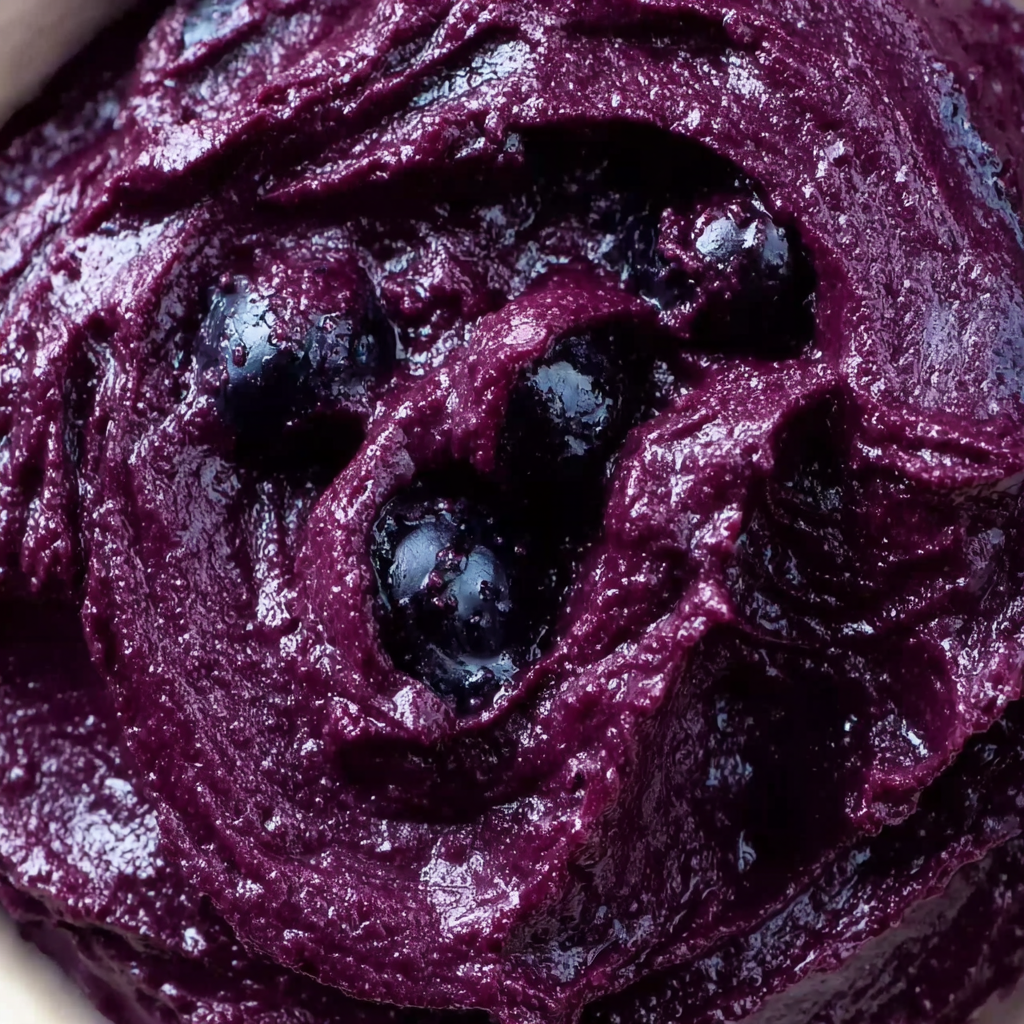
There’s something incredibly soothing about letting fruit gently simmer on the stove, filling the kitchen with its warm, sweet aroma. Blueberry butter is the kind of recipe that feels made for a slow weekend morning, when you can watch simple ingredients gradually transform into something truly special. It’s just as fitting on a festive brunch table as it is nestled inside a beautifully arranged homemade gift basket.
This recipe draws inspiration from summers spent gathering fresh berries at local farms, where baskets filled up quicker than we could enjoy them. Turning those sun-ripened blueberries into a smooth, concentrated fruit butter soon became a cherished tradition. Unlike traditional jam, blueberry butter is silkier, richer, and more intensely flavored. It captures the pure essence of blueberries in a way that feels both nostalgic and refined.

What Is Blueberry Butter?
Blueberry butter is a smooth, spreadable fruit preserve made by slowly cooking blueberries with sweetener and a touch of citrus until thick and concentrated. Unlike traditional jam or jelly, fruit butter does not rely on pectin to gel. Instead, it cooks down gradually, allowing the natural sugars and flavors to intensify. The result is a velvety spread that feels luxurious yet simple. It is perfect on toast, biscuits, pancakes, waffles, oatmeal, yogurt, and even swirled into baked goods. Because it is cooked longer than jam, blueberry butter develops a deeper color and a rich, almost caramelized berry flavor that truly stands out.Why You’ll Love This Easy Homemade Blueberry Butter
- Made with simple pantry ingredients
- No special equipment required
- Naturally thickened without added pectin
- Freezer-friendly and giftable
- Perfect balance of sweet and tart
Ingredients for Blueberry Butter
Here’s everything you need to make this easy homemade fruit butter:- 4 cups fresh or frozen blueberries (about 600 grams)
- 1/2 cup granulated sugar (100 grams), adjust to taste
- 2 tablespoons fresh lemon juice (30 ml)
- 1 teaspoon lemon zest
- 1/4 teaspoon ground cinnamon (optional, 0.5 grams)
- Pinch of salt (about 1/16 teaspoon)
How to Make Blueberry Butter
Step 1: Prepare the Blueberries
If using fresh blueberries, rinse them thoroughly and remove any stems. If using frozen blueberries, there is no need to thaw them beforehand.Step 2: Combine Ingredients
In a medium saucepan, combine:- 4 cups blueberries
- 1/2 cup granulated sugar
- 2 tablespoons lemon juice
- 1 teaspoon lemon zest
- 1/4 teaspoon cinnamon (if using)
- Pinch of salt
Step 3: Simmer and Soften
Place the saucepan over medium heat. As the mixture warms, the blueberries will begin to release their juices. Stir occasionally and bring to a gentle simmer. Allow the mixture to cook for 10–15 minutes until the berries are very soft and beginning to break down.Step 4: Blend Until Smooth
Using an immersion blender, carefully puree the mixture until completely smooth. If you do not have an immersion blender, transfer the mixture in batches to a standard blender. Be cautious with hot liquids. Return the pureed mixture to the saucepan if necessary.Step 5: Cook Down to Butter Consistency
Reduce heat to low and continue simmering for 25–40 minutes, stirring frequently to prevent sticking. The blueberry butter is ready when:- It thickens noticeably
- It coats the back of a spoon
- A line drawn through it on a plate holds its shape
Step 6: Cool and Store
Remove from heat and let cool completely. Transfer to clean jars or airtight containers. Store in the refrigerator for up to 2 weeks or freeze for up to 3 months.
Tips for the Best Blueberry Butter
1. Adjust Sweetness Carefully
Blueberries vary in sweetness depending on season. Taste your mixture before blending and adjust sugar if needed. You can add an additional 1–2 tablespoons (12–25 grams) if desired.2. Use Lemon for Balance
The 2 tablespoons (30 ml) of lemon juice brighten the flavor and prevent the butter from tasting flat. Do not skip it.3. Stir Frequently While Reducing
Fruit butter thickens gradually, and sugars can stick to the bottom of the pan. Stir often during the final stage.4. For Ultra-Smooth Texture
If you want an exceptionally silky finish, press the blended mixture through a fine mesh sieve before the final simmer.Creative Ways to Use Blueberry Butter
Blueberry butter is far more versatile than traditional jam. Try it in these delicious ways:- Spread on warm toast or English muffins
- Layer inside cakes or cupcakes
- Swirl into cheesecake batter
- Stir into plain yogurt or oatmeal
- Add to smoothie bowls
- Use as a filling for thumbprint cookies
- Spread onto crepes or pancakes
- Mix into softened butter for blueberry compound butter
Storage and Freezing Instructions
Refrigeration
Store blueberry butter in sterilized jars or airtight containers in the refrigerator for up to 2 weeks.Freezing
To freeze:- Allow blueberry butter to cool completely.
- Transfer to freezer-safe containers, leaving 1/2 inch (1.25 cm) headspace.
- Freeze for up to 3 months.
Frequently Asked Questions
1. What is the difference between blueberry butter and blueberry jam?
Blueberry butter and blueberry jam may look similar, but their texture and preparation methods differ significantly. Jam is typically made by cooking fruit with sugar and pectin until it reaches a gel-like consistency. The fruit pieces often remain partially intact, giving jam a chunky or slightly textured feel. Blueberry butter, on the other hand, is cooked longer and blended until completely smooth. It relies on slow evaporation rather than added pectin to achieve thickness. This extended cooking process concentrates the natural sugars and flavors, creating a deeper, richer taste. The final result is velvety and spreadable, more like a fruit puree reduction than a gel. Another key difference is the flavor intensity. Because blueberry butter reduces more, it tastes more concentrated and slightly caramelized compared to the brighter, fresher flavor of jam. If you prefer smooth spreads with a luxurious mouthfeel, blueberry butter is likely to become your favorite.2. Can I use frozen blueberries instead of fresh?
Yes, frozen blueberries work beautifully in this recipe. In fact, they are often picked at peak ripeness and frozen quickly, which preserves their flavor and nutrients. You do not need to thaw frozen blueberries before cooking. Simply add the 4 cups (600 grams) directly to the saucepan along with the sugar and lemon juice. You may need to extend the initial simmering time by 3–5 minutes as the berries release extra moisture. Keep in mind that frozen berries sometimes contain slightly more water, so the reduction step may take a bit longer. Just continue simmering until the mixture thickens to the desired consistency. The final flavor and texture will be just as delicious as when using fresh berries.3. How do I know when blueberry butter is thick enough?
Determining the right consistency is one of the most common concerns. The blueberry butter should coat the back of a spoon and not drip off immediately. You can also perform the plate test: place a small spoonful on a chilled plate and draw a line through it with your finger. If the line holds and the mixture does not quickly run back together, it is ready. Remember that fruit butter thickens significantly as it cools. It is better to stop cooking when it looks slightly looser than you want. Overcooking can result in a paste-like texture once chilled. Patience is key. The slow simmer stage may take 25–40 minutes, depending on moisture levels and stovetop heat.4. Can I reduce the sugar or use an alternative sweetener?
Yes, you can adjust the sweetness to your preference. The recipe calls for 1/2 cup (100 grams) of granulated sugar, but you may reduce it to 1/3 cup (65 grams) if your blueberries are naturally sweet. Alternative sweeteners such as honey or maple syrup can also be used. Start with 1/3 cup (80 ml) and adjust to taste. Keep in mind that liquid sweeteners may slightly extend the cooking time since they add moisture. Reducing sugar will not affect gelling because this recipe does not rely on pectin. However, sugar does contribute to preservation, so lower-sugar versions should be stored carefully and consumed sooner.Health Benefits of Blueberries
Blueberries are known for their impressive nutritional profile. They are rich in antioxidants, particularly anthocyanins, which give them their deep blue color. They also contain fiber, vitamin C, and vitamin K. While blueberry butter does contain added sugar, it still delivers the natural benefits of whole fruit. Enjoyed in moderation, it can be part of a balanced diet.Making Blueberry Butter as a Gift
Homemade blueberry butter makes a thoughtful and elegant gift. Pour it into small glass jars, tie with twine, and attach a handwritten label. It is ideal for holidays, housewarmings, or hostess gifts. To make it even more special, include a small card suggesting serving ideas such as spreading on warm biscuits or stirring into yogurt.