PB&J Stuffed Cookies
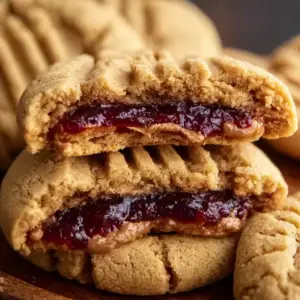
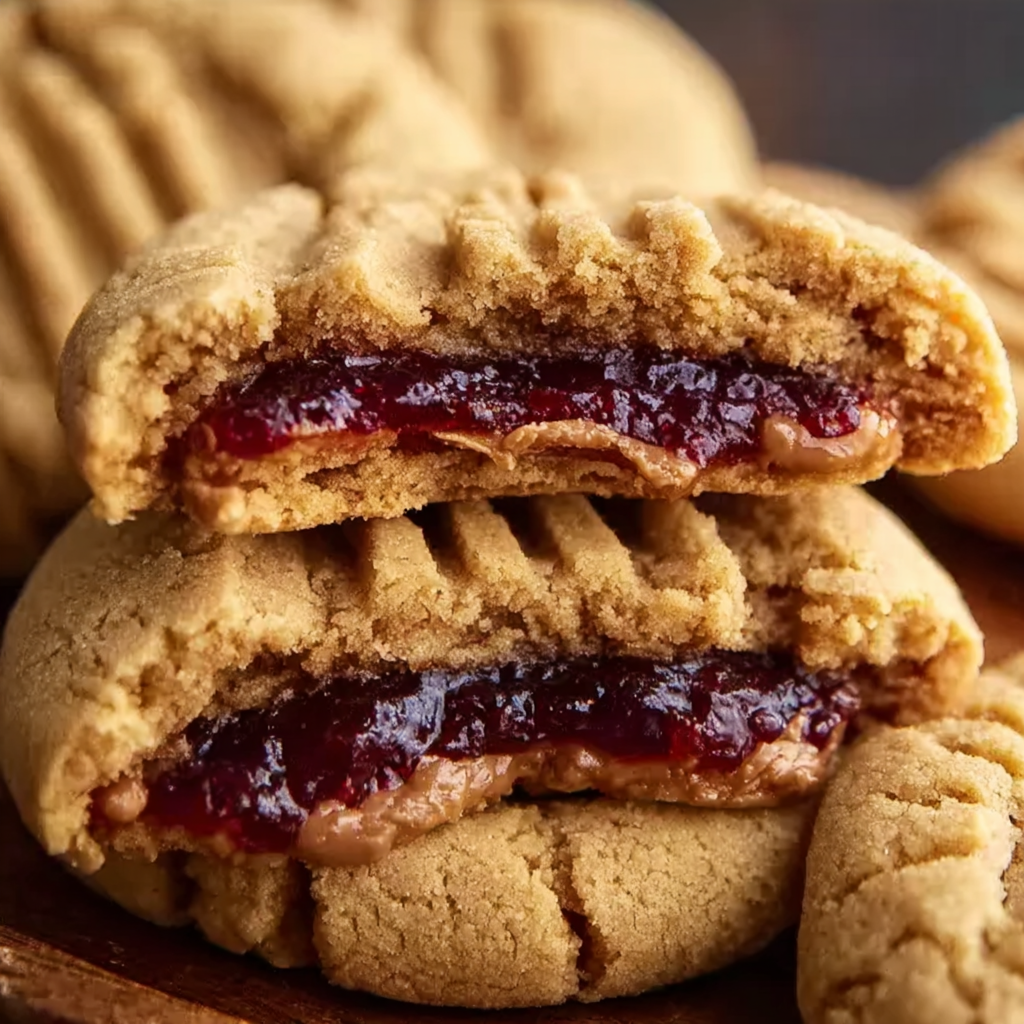
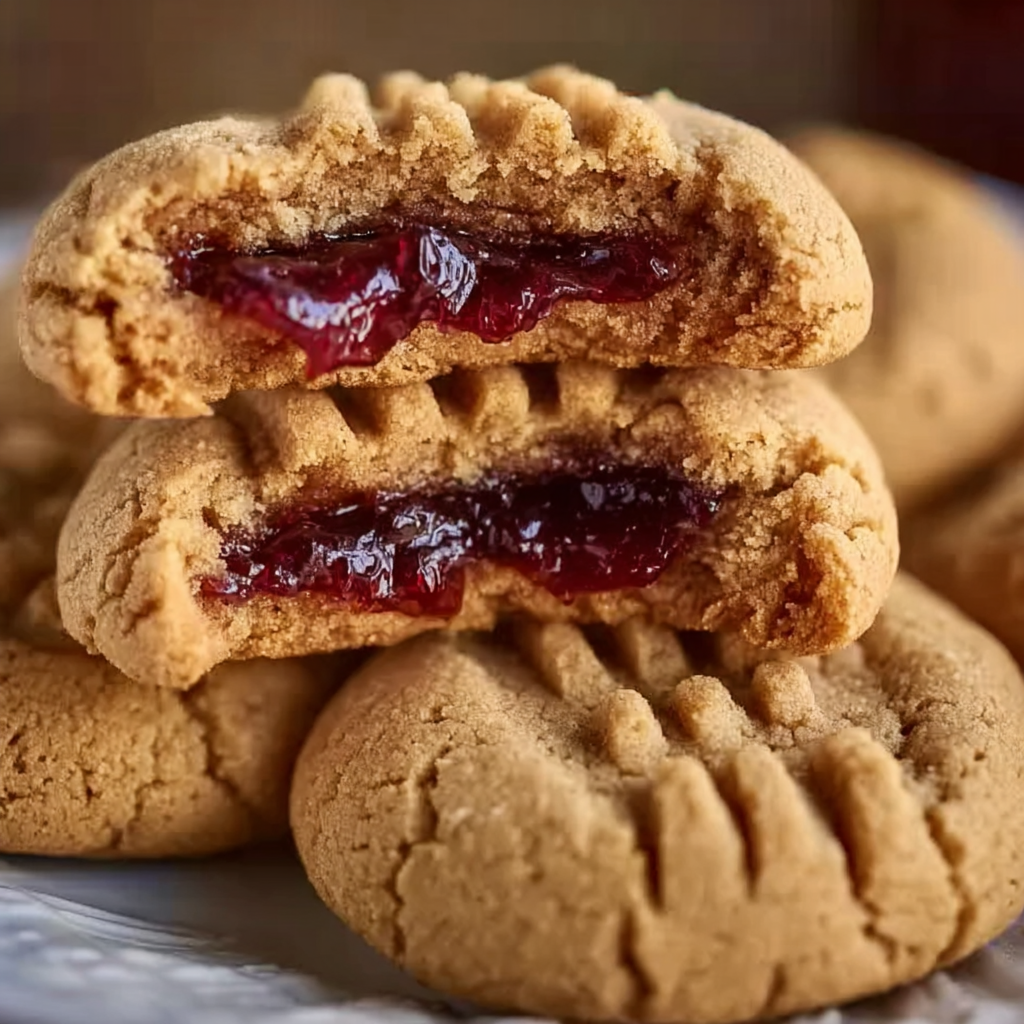
There’s something magical about the combination of peanut butter and jelly. PB&J stuffed cookies take that nostalgic flavor pairing and wrap it in a soft, chewy cookie shell, offering a comforting treat that both kids and adults adore. These cookies are a creative twist on the classic sandwich, with a warm, gooey center of jelly enveloped in rich, peanut butter dough.
What makes these cookies irresistible is the balance between sweet and salty, chewy and gooey, and the surprise of jelly hidden inside. Unlike typical drop cookies, this version requires a bit of assembly, which makes the results even more satisfying. The peanut butter cookie itself is soft and tender with crisp edges, and the jelly center adds an unexpected burst of flavor with every bite.
The popularity of PB&J goes beyond lunchboxes—it’s rooted in American culture. According to Wikipedia, the PB&J sandwich has been a staple since the early 1900s, gaining popularity due to its simplicity and shelf-stable ingredients. Today, it continues to inspire creative recipes like these PB&J cookies. Whether you’re baking for your kids, hosting a casual get-together, or simply craving comfort food, these cookies are a perfect choice.
If you’re looking for a fun kitchen project, these cookies are ideal. They’re easy enough for beginner bakers but offer enough flair to impress. For more baking inspiration, check out these fun baking projects for kids on Pinterest. Want to explore more variations of PB&J cookies? Here’s a collection of creative PB&J cookie ideas to try next.
These PB&J stuffed cookies are not only delicious—they’re also a heartwarming reminder of childhood. They bring back memories of school lunches, comfort food, and simple joys, now elevated into a bake-worthy dessert you’ll want to make on repeat.
The History of PB&J and Its Cultural Significance
Long before PB&J stuffed cookies existed, the pairing of peanut butter and jelly held a firm place in American food history. The combination emerged as an affordable, nourishing option that appealed to families across generations. Its simplicity, long shelf life, and comforting flavor made it a household essential, especially during times when convenience and cost mattered most.
Peanut butter itself rose to prominence in the early twentieth century, as explained in the history of peanut butter on Wikipedia, while fruit spreads evolved from traditional preservation methods detailed in types of fruit jelly. Together, they formed the iconic sandwich that later inspired desserts, cookies, and baked treats, expanding far beyond its original lunchbox role.
Today, PB&J flavors appear in countless sweets, from cakes to ice cream, but cookies remain a favorite. According to cookie baking techniques and the origin of PB&J, transforming familiar foods into cookies adds novelty without losing comfort. This cultural adaptability explains why PB&J cookies continue to resonate, blending tradition, creativity, and emotional connection in every bite. Across generations, this dessert evolution reflects changing tastes while honoring roots, ensuring the classic pairing remains relevant, recognizable, and deeply comforting in modern home baking culture for families everywhere today globally.
Why PB&J Cookies Are a Must-Try Dessert
There are countless cookie recipes out there, but PB&J stuffed cookies stand out because they combine nostalgia with indulgence. These cookies bring together the familiar flavors of a peanut butter and jelly sandwich and transform them into a soft, chewy dessert with a hidden surprise center.
PB&J cookies are more than just delicious — they’re versatile, comforting, and fun to make. Their chewy texture, salty-sweet balance, and warm jelly center offer a unique sensory experience in every bite. Unlike traditional cookies, they’re filled, which adds both flavor and texture variation that makes them more interesting to eat and serve.
These cookies are a hit at parties, bake sales, lunchbox surprises, and after-school snacks. They’re also easy to customize and can accommodate different dietary needs with a few simple swaps. For a fun variation, explore alternative fillings from this Pinterest board on PB&J cookie ideas, or make a big batch and freeze some for future cravings. When you want a treat that feels like a hug from your childhood, PB&J stuffed cookies deliver.
Essential Ingredients Breakdown & Substitutes
Peanut Butter
The star of the dough is, of course, peanut butter. Using creamy peanut butter creates a smooth texture, but you can opt for crunchy if you want added texture. Processed peanut butters (like Skippy or Jif) tend to produce more consistent results than natural ones because they contain stabilizers that prevent oil separation.
For allergy-friendly versions, try alternatives like almond butter or sunflower seed butter. Sunflower seed butter is a popular nut-free substitute that can be used in school-safe environments, as noted in the article on nut-free peanut butter alternatives. Just be sure the substitute has a similar texture to regular peanut butter for the dough to hold its shape.
Jelly/Jam
The jelly adds a burst of fruity sweetness in the center. Grape jelly and strawberry jam are the most traditional options, but raspberry, apricot, or even fig preserves can be used for a twist. For best results, avoid using jelly that’s too runny; thick spreads work better because they won’t leak out during baking.
You can also use homemade options if you prefer more control over the sweetness and texture. Learn more about different types of jams and jellies from Wikipedia’s entry on fruit preserves. To prevent leaking, freeze small dollops of jelly before assembling the cookies.
Butter, Sugars, and Egg
The combination of unsalted butter, brown sugar, and granulated sugar helps create that chewy, soft texture. Brown sugar brings moisture and depth from molasses, while granulated sugar helps with structure and crisp edges.
The egg binds everything together. If you’re baking for someone who can’t have eggs, look into options from egg-free cookie alternatives, such as flaxseed meal or commercial egg replacers.
Flour, Baking Soda, and Salt
All-purpose flour is the base that provides structure. You can also use a gluten-free 1:1 flour blend if needed. Check out this article on all-purpose flour in baking for tips on how flour affects cookie texture.
Baking soda acts as the leavening agent, helping the cookies spread and brown slightly. Salt enhances the overall flavor, balancing the sweetness. Learn more about the role of baking soda in cookies to understand how small quantities can make a big difference.
How to Make PB&J Stuffed Cookies: Step-by-Step Guide
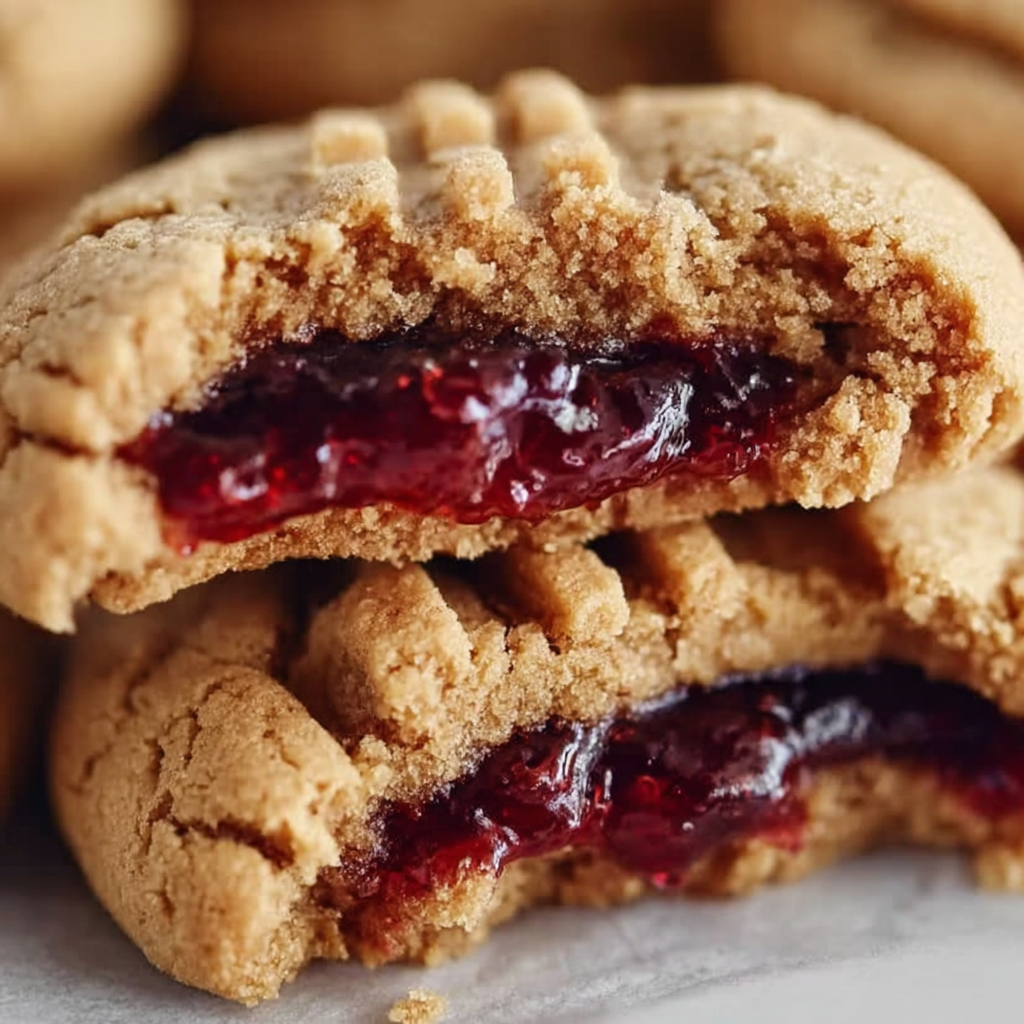
Making PB&J cookies is easier than you might think. Follow this step-by-step guide for soft, chewy results with a perfectly gooey center.
-
Cream the butter and sugars
In a large bowl, beat together softened butter, peanut butter, brown sugar, and granulated sugar until light and fluffy. This incorporates air for a lighter texture. -
Add the wet ingredients
Mix in the egg and vanilla extract until well combined. -
Combine dry ingredients
In a separate bowl, whisk together the flour, baking soda, and salt. Gradually mix the dry ingredients into the wet ingredients to form a soft dough. -
Assemble the cookies
Scoop a tablespoon of dough and flatten it in your hand. Add about ½ teaspoon of jelly in the center. Top with another flattened dough scoop and seal the edges carefully. Roll into a smooth ball. -
Bake
Place the cookie dough balls on a parchment-lined baking sheet, spacing them at least 2 inches apart. Bake at 350°F (175°C) for 10–12 minutes, until the edges are lightly golden. -
Cool
Let the cookies rest on the baking sheet for a few minutes before transferring them to a wire rack to cool completely.
Baking Tips for the Perfect PB&J Cookie
-
Chill your dough if it feels too soft to handle — this helps with shaping and prevents spreading.
-
Freeze the jelly dollops beforehand to make stuffing cleaner and prevent leaks.
-
Use a cookie scoop for even portions and consistent baking.
-
Line your baking tray with parchment paper to prevent sticking and ensure even browning.
-
Don’t overbake — cookies will continue to cook slightly after being removed from the oven.
For more detailed cookie tips, see the guide on cookie baking techniques.
Storage and Make-Ahead Tips
-
Store cooled cookies in an airtight container at room temperature for up to 5 days.
-
For longer storage, freeze baked cookies for up to 2 months.
-
You can also freeze unbaked cookie dough balls. Just stuff and shape them, then freeze on a tray before transferring to a bag or container. Bake straight from frozen, adding 1–2 minutes to the baking time.
Fun Variations to Try
-
Change up the jelly: Try raspberry, blueberry, or apricot jam for different flavors.
-
Add chocolate chips to the dough for a richer flavor profile.
-
Swap peanut butter for Nutella or cookie butter for a fun twist.
-
Make them mini or jumbo depending on your occasion or serving size.
-
Drizzle with chocolate or a simple vanilla glaze after baking for extra flair.
You can find more flavor inspiration on Pinterest: PB&J Cookie Ideas to make your own unique version.
Serving Suggestions: Make It a Party Treat
-
Serve PB&J cookies with milk, coffee, or hot chocolate for the perfect cozy pairing.
-
Add them to cookie platters for parties or holiday gifts.
-
Include in kids’ lunchboxes or school snack bags (use sunflower seed butter for nut-free schools).
-
Stack and wrap in ribbon as a giftable treat.

FAQs
Can I make these cookies gluten-free?
Yes, substitute all-purpose flour with a 1:1 gluten-free baking flour. Ensure it contains xanthan gum for structure.
Can I use crunchy peanut butter?
Absolutely! Crunchy peanut butter adds texture to the dough, but may make sealing the jelly center slightly trickier.
What’s the best jelly for PB&J cookies?
Thicker jams or preserves work best. Grape and strawberry are traditional, but you can experiment with any flavor you enjoy.
How do I keep the jelly from leaking?
Freeze jelly dollops before stuffing or use a thicker jam to prevent it from melting and seeping during baking.
Can I freeze PB&J cookie dough?
Yes! Freeze pre-stuffed dough balls on a tray, then store in a sealed bag. Bake directly from frozen.
Are these safe for nut allergies?
Not as written, but you can replace peanut butter with sunflower seed butter for a nut-free version. Read more on nut allergy-safe options.
Can I make them vegan?
Yes. Use plant-based butter and an egg replacer (like flax egg). For more help, explore this article on egg substitute
PB&J Stuffed Cookies: A Soft, Chewy Twist on a Childhood Classic
These PB&J Stuffed Cookies take the nostalgic flavors of a peanut butter and jelly sandwich and turn them into a warm, soft, chewy dessert. Each cookie is stuffed with a fruity jelly center, creating a gooey surprise that makes them perfect for both kids and adults. Easy to make and fun to customize, they’re ideal for bake sales, lunchbox treats, or anytime you crave a comforting, classic flavor with a twist.
- Author: Clara
Ingredients
- ½ cup unsalted butter, softened
- ½ cup creamy peanut butter
- ½ cup granulated sugar
- ½ cup brown sugar
- 1 large egg
- 1 teaspoon vanilla extract
- 1 ¼ cups all-purpose flour
- ½ teaspoon baking soda
- ¼ teaspoon salt
- ¼ cup strawberry or grape jelly
Instructions
In a large bowl, cream together the butter, peanut butter, granulated sugar, and brown sugar until light and fluffy.
Add the egg and vanilla extract, mixing until well combined.
In a separate bowl, whisk together the flour, baking soda, and salt. Gradually mix the dry ingredients into the wet mixture until a soft dough forms.
Scoop about 1 tablespoon of dough and flatten it in your hand. Place a small dollop (about ½ teaspoon) of jelly in the center.
Take another tablespoon of dough, flatten it, and place it over the jelly. Seal the edges and gently roll into a ball.
Place the stuffed cookie dough balls on a lined baking sheet, spacing them a couple inches apart.
Bake in a preheated oven at 350°F (175°C) for 10–12 minutes, or until the edges are lightly golden.
Let cookies cool on the baking sheet for a few minutes before transferring to a wire rack.
Serve once fully cooled.
Notes
-
For best results, freeze small dollops of jelly before stuffing.
-
If using natural peanut butter, stir well to incorporate oils before measuring.
-
Do not overbake — cookies should be lightly golden at the edges and soft in the center.
-
Store in an airtight container for up to 5 days or freeze for up to 2 months.
-
Substitute peanut butter with sunflower seed butter for a nut-free version.