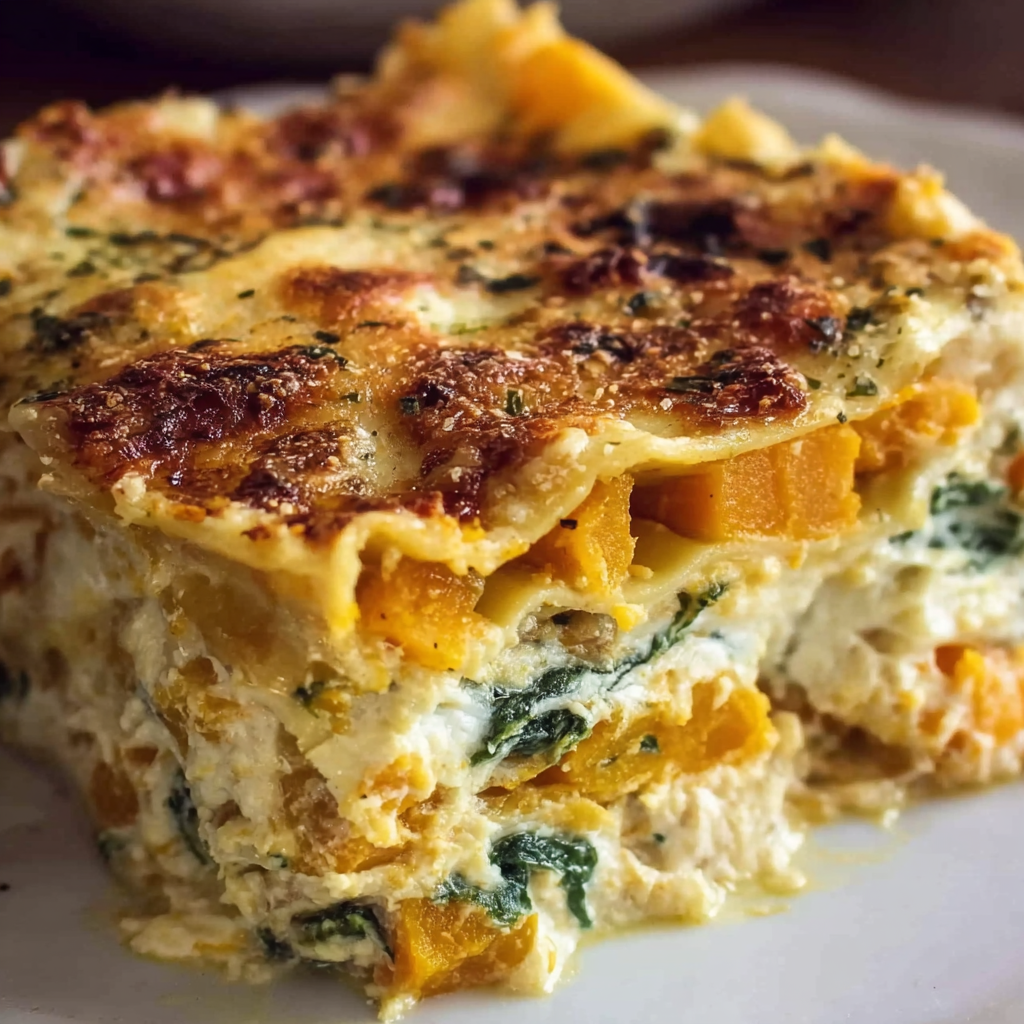
Why This Butternut Squash Lasagna is Perfect for Fall
Fall is the season of comfort food, and nothing captures that warmth quite like a hearty butternut squash and spinach lasagna. With its cozy layers, savory aroma, and rich flavor, this dish is the perfect vegetarian alternative to traditional lasagna. Whether you’re serving it at a family dinner, a holiday gathering, or simply indulging in a comforting meal on a chilly evening, this recipe is designed to impress. This meatless lasagna offers all the depth of flavor you’d expect from a traditional dish, but uses nutrient-rich butternut squash and iron-packed spinach in place of meat. Roasting the squash brings out a natural sweetness and nuttiness that pairs beautifully with creamy ricotta and marinara sauce. Unlike meat-heavy alternatives, this version feels light yet filling, making it a great choice for both vegetarians and omnivores. Butternut squash isn’t just delicious—it’s also a nutritional powerhouse. According to Wikipedia, it’s loaded with vitamin A, potassium, and fiber, making it a smart seasonal addition. The comfort factor of pasta layered with cheese and sauce, combined with the seasonal produce, gives this lasagna an autumnal twist that’s hard to resist. Plus, as this dish is vegetarian, it’s suitable for a wide range of dietary preferences, making it a reliable go-to recipe throughout the cooler months.
What Makes This Lasagna Unique?
This butternut squash and spinach lasagna stands out for its flavor balance, ease of preparation, and health-conscious approach. Unlike many traditional lasagna recipes that rely heavily on ground meat and béchamel sauce, this version swaps in roasted butternut squash for a natural, slightly sweet base and layers of fresh spinach for a boost of greens. Together, they create a perfect harmony of creamy, savory, and earthy flavors. The inclusion of ricotta and Parmesan cheese adds richness without overwhelming the vegetables. Combined with melty mozzarella, the cheese layers provide that classic lasagna texture and indulgence. The use of marinara sauce adds acidity and brightness, keeping the dish from feeling too heavy. As noted in Wikipedia’s page on ricotta, this cheese is commonly used in Italian pasta dishes for its mild flavor and smooth texture, which complements both vegetables and pasta perfectly. What makes this recipe even more appealing is how adaptable it is. You can easily swap in kale, mushrooms, or caramelized onions for a twist, or use gluten-free lasagna noodles to suit dietary needs. On Pinterest, you’ll find dozens of creative takes on vegetarian lasagna that show just how versatile this dish can be, especially when it’s made with seasonal vegetables like squash. This lasagna also makes a great make-ahead meal. It can be assembled ahead of time and refrigerated or frozen, then baked fresh when needed. Whether you’re cooking for a group or meal prepping for the week, this dish delivers both flavor and flexibility.Ingredients Breakdown
Creating the best butternut squash and spinach lasagna begins with using fresh, high-quality ingredients. Each component brings something special to the table, from flavor to texture to nutrition. Here’s a breakdown of what you’ll need and why each ingredient matters. For the Squash Filling- 1 medium butternut squash, peeled and diced – Butternut squash is the heart of this recipe. Its sweet, nutty flavor intensifies when roasted. According to Wikipedia, it’s rich in vitamins A and C.
- 1 tablespoon olive oil – Helps caramelize the squash during roasting.
- 2 cloves garlic, minced – Adds aromatic depth.
- 1 teaspoon fresh thyme (or ½ teaspoon dried) – Offers a subtle earthiness that complements the squash.
- Salt and pepper, to taste – Enhances and balances flavors.
- 1 tablespoon olive oil
- 1 small onion, finely chopped – Adds a mild sweetness once sautéed.
- 3 cloves garlic, minced – Intensifies the savory aspect.
- 5 cups fresh spinach – A nutritional powerhouse, spinach is packed with iron and fiber. You can substitute with frozen spinach, just be sure to squeeze out excess moisture.
- Salt and pepper, to taste
- 15 oz ricotta cheese – Creamy and smooth, ricotta gives structure and richness to the layers. Read more about it on Wikipedia.
- 1 egg – Binds the mixture together.
- ½ cup grated Parmesan cheese – Sharp, salty, and essential for flavor. Parmesan, as detailed in Parmigiano Reggiano’s Wiki, is a classic Italian hard cheese with complex flavor.
- Salt and pepper, to taste
- 9 lasagna noodles, cooked and drained – Regular or no-boil noodles work. Learn about the history of pasta on Wikipedia.
- 2 cups shredded mozzarella cheese – Melty, stretchy texture that everyone loves.
- ½ cup grated Parmesan cheese – For the golden-bubbly topping.
- 2 cups marinara sauce – Bright, acidic contrast to the creamy and sweet layers. Wikipedia’s page on marinara dives into the sauce’s origin and traditional use.
Roasting the Butternut Squash
Roasting is key to developing the sweet and nutty flavors that define butternut squash. Unlike steaming or boiling, roasting enhances the squash’s texture and deepens its flavor, making it a star ingredient in this dish. Begin by preheating the oven to 375°F (190°C). Toss your peeled and diced squash with olive oil, salt, pepper, minced garlic, and thyme. Spread the cubes evenly on a baking sheet, ensuring they’re not crowded—this allows the edges to caramelize instead of steaming. Roast for 25–30 minutes until the squash is fork-tender and slightly golden. Once roasted, mash the squash gently with a fork. Don’t purée it completely—leaving some texture adds dimension to the lasagna. Roasting vegetables like this is one of the best ways to bring out their natural sweetness, as highlighted in this guide on roasting from Wikipedia. You can add a pinch of nutmeg or cinnamon for a slightly sweeter, warmer taste, aligning it with autumn flavors. This simple step transforms the squash into a rich, velvety layer that elevates the entire dish.Preparing the Spinach Mixture
The spinach layer adds a vibrant green color and essential nutrients to the lasagna. Fresh spinach is ideal for both texture and flavor, though frozen spinach can be used as a convenient substitute. If using frozen, thaw completely and squeeze out excess liquid. Heat olive oil in a skillet over medium heat. Add finely chopped onion and sauté until soft and translucent, about 5 minutes. Stir in minced garlic and cook for 1 additional minute to release its aroma. Add the spinach and cook, stirring frequently, until wilted. This takes just 2–3 minutes. Season with salt and pepper to taste. Allow the mixture to cool slightly before layering in the lasagna. Avoid overcooking—spinach should retain a bit of its vibrant green color. Fresh spinach is loaded with iron, calcium, and fiber, making it an excellent ingredient in meatless recipes. You’ll find it frequently paired with pasta in recipes featured on Pinterest, especially in fall-inspired dishes.Mixing the Cheese Filling
The cheese filling brings the creamy richness that’s essential in any satisfying lasagna. It also serves as a balance between the hearty vegetables and the chewy pasta layers. In a mixing bowl, combine ricotta cheese, one egg, and grated Parmesan. The egg helps hold everything together, especially once the lasagna is sliced and served. Season with salt and pepper to enhance the natural flavors of the cheeses. For an extra layer of complexity, consider mixing in a dash of nutmeg or lemon zest. These additions are subtle but add brightness and warmth. Ricotta, as mentioned in the Wikipedia entry, has a mild taste that allows it to blend well with herbs and vegetables without overpowering them. This mixture will be used in between each layer, creating a creamy contrast to the roasted squash and sautéed spinach.How to Layer the Perfect Lasagna (Step-by-Step Guide)
Layering is where the lasagna truly comes together. The sequence and proportions matter to ensure a well-balanced bite in every forkful. Follow this guide carefully for the perfect structure.- Start with sauce: Spread a thin layer of marinara sauce on the bottom of your 9×13-inch baking dish to prevent sticking.
- Add noodles: Lay down three lasagna noodles, slightly overlapping.
- Layer the fillings: Spread half of the mashed butternut squash over the noodles. Then, top with half of the spinach mixture, followed by one-third of the ricotta mixture. Sprinkle a layer of mozzarella on top.
- Repeat: Add another layer of noodles, then the remaining squash, spinach, and another third of the ricotta. Top with mozzarella.
- Final layer: Place the last three noodles on top, spread with the remaining ricotta, and pour over the remaining marinara sauce. Finish with mozzarella and a generous sprinkle of Parmesan.

Baking Tips for the Best Texture
Getting the bake just right is key to a golden, bubbly top and perfectly cooked layers. Preheat your oven to 375°F (190°C).- Cover with foil: This keeps moisture in during the first half of baking and prevents the cheese from burning. Bake for 25 minutes covered.
- Uncover for final browning: Remove the foil and continue baking for 15–20 more minutes. The cheese should bubble and turn golden brown.
- Let it rest: Allow the lasagna to cool for at least 10 minutes after baking. This helps the layers set, making slicing easier.
Serving Suggestions: What to Pair It With
This butternut squash and spinach lasagna pairs wonderfully with simple side dishes that highlight its rich, savory flavor.- Garlic bread or sourdough toast – Perfect for soaking up any extra marinara.
- A fresh green salad – Use arugula, spinach, or mixed greens with a light vinaigrette.
- Warm fall beverages – Apple cider or mulled wine complement the autumnal flavors.
Storage and Make-Ahead Tips
This lasagna stores and reheats well, making it ideal for batch cooking or preparing ahead for a busy week.- Refrigeration: Store leftovers in an airtight container for up to 4 days.
- Freezing: Freeze fully assembled (unbaked) lasagna for up to 3 months. Use parchment between layers if stacking multiple.
- Reheating: Reheat slices in the oven at 350°F until warmed through, or microwave individual portions. Cover with foil to retain moisture.
Nutrition Highlights
This vegetarian lasagna is both comforting and nourishing. Butternut squash is high in fiber and vitamin A, while spinach provides iron, magnesium, and antioxidants.- Ricotta and Parmesan offer protein and calcium.
- Mozzarella brings healthy fats in moderation.
- With whole ingredients and no meat, this dish is naturally lighter yet satisfying.

FAQ
Can you make butternut squash lasagna ahead of time? Yes. Assemble it up to two days in advance, refrigerate, and bake when needed. It also freezes well for longer storage. What type of cheese goes best with butternut squash? Mild cheeses like ricotta and mozzarella work well, balanced by salty Parmesan. These enhance squash’s natural sweetness without overpowering it. Can I use frozen spinach instead of fresh? Absolutely. Thaw and squeeze out extra moisture before cooking. It’s a great time-saver. Is vegetarian lasagna filling enough for meat-eaters? Yes. With rich layers and roasted vegetables, this lasagna is hearty enough to satisfy even non-vegetarians. How do I keep lasagna from being watery? Roast the squash instead of boiling, drain spinach well, and don’t overload with sauce. Let it rest after baking to firm up layers. PrintNo-Meat Butternut Squash Lasagna the Whole Family Will Love

This Butternut Squash and Spinach Lasagna is a comforting, cheesy, and hearty vegetarian dish perfect for fall. Layers of roasted squash, sautéed spinach, creamy ricotta, marinara sauce, and melty mozzarella come together to create a lasagna that’s both healthy and indulgent. Perfect for family dinners, holiday gatherings, or meal prepping, this crowd-pleasing recipe proves that vegetarian meals can be just as satisfying as their meaty counterparts.
Ingredients
For the squash filling:
- 1 medium butternut squash, peeled and diced
- 1 tablespoon olive oil
- Salt and pepper, to taste
- 2 cloves garlic, minced
- 1 teaspoon fresh thyme leaves (or ½ tsp dried thyme)
For the spinach layer:
- 1 tablespoon olive oil
- 1 small onion, finely chopped
- 3 cloves garlic, minced
- 5 cups fresh spinach
- Salt and pepper, to taste
For the cheese mixture:
- 15 oz (425g) ricotta cheese
- 1 egg
- ½ cup grated Parmesan cheese
- Salt and pepper, to taste
For the lasagna:
- 9 lasagna noodles, cooked and drained
- 2 cups shredded mozzarella cheese
- ½ cup grated Parmesan cheese
- 2 cups marinara sauce
Instructions
Preheat the oven to 375°F (190°C).
Toss diced butternut squash with olive oil, salt, pepper, garlic, and thyme. Spread on a baking sheet and roast for 25–30 minutes, until tender. Mash slightly with a fork and set aside.
Heat olive oil in a skillet over medium heat. Sauté onion until soft, then add garlic and cook for 1 minute. Add spinach and cook until wilted. Season with salt and pepper. Remove from heat.
In a mixing bowl, combine ricotta, egg, Parmesan, salt, and pepper. Mix until smooth.
Spread a thin layer of marinara sauce in the bottom of a 9×13-inch baking dish. Place 3 lasagna noodles on top.
Layer with half of the mashed butternut squash, half of the spinach mixture, and one-third of the ricotta mixture. Sprinkle with mozzarella.
Repeat the layers: noodles, remaining squash, remaining spinach, another third of ricotta, and mozzarella.
Top with final layer of noodles, remaining ricotta, marinara sauce, mozzarella, and Parmesan.
Cover with foil and bake for 25 minutes. Remove foil and bake an additional 15–20 minutes, until bubbly and golden on top.
Let the lasagna rest for 10 minutes before slicing and serving.
Notes
-
You can substitute kale or Swiss chard for spinach if desired.
-
Use no-boil noodles for quicker prep, but make sure to use extra sauce.
-
Add a hint of nutmeg to the cheese filling for a warm, fall-inspired twist.
-
To make this dish gluten-free, use gluten-free lasagna noodles.
-
For a vegan version, replace cheese with plant-based alternatives and use a flax egg instead of a regular egg.