No-Bake Oatmeal Cookies
When you’re craving something sweet and satisfying without turning on the oven, no-bake oatmeal cookies come to the rescue. These chewy, chocolatey treats combine the richness of cocoa, the nuttiness of peanut butter, and the heartiness of oats into a quick and easy dessert that’s ready in minutes. They’re especially ideal during warm months when baking can heat up your kitchen, or anytime you need a last-minute snack or potluck contribution. Unlike traditional baked cookies, these no-bake chocolate oatmeal cookies rely on a stovetop boiling method that binds the ingredients together. Once set, they firm up into perfectly chewy morsels with a soft, fudgy center. Their simplicity makes them perfect for beginner bakers, families with kids, or anyone who wants a nostalgic treat with minimal effort. No-bake cookies also trace their roots to mid-20th-century American kitchens, often appearing in church cookbooks and family holiday traditions. Their popularity has continued, not just for convenience, but also for their versatility. If you’re interested in learning more about the history of oatmeal cookies, you can check out this overview on Wikipedia, which explains how oats became a popular cookie ingredient over time. You can also explore some creative no-bake dessert recipes through curated ideas on Pinterest for inspiration. If you’re looking for something gluten-free, kid-friendly, or holiday party-ready, these cookies can be customized in countless ways. Whether you add coconut, nuts, or use almond butter, these no-bake oatmeal cookies offer a reliable base that adapts to your needs without sacrificing flavor or texture.
Why You’ll Love This Recipe
There are plenty of reasons why these no-bake oatmeal cookies with chocolate and peanut butter deserve a permanent spot in your recipe collection. First and foremost, they’re incredibly simple. With just a handful of pantry staples, you can whip up a batch in less than 15 minutes, making them ideal for busy days or spontaneous sweet cravings.- No oven needed: These cookies set at room temperature, so you avoid heating your kitchen—perfect for summer months.
- Minimal ingredients: Most of the items are likely already in your kitchen, like quick oats, peanut butter, and cocoa powder.
- Fast and fuss-free: Once the mixture reaches a rolling boil, the rest is just mix, scoop, and wait.
- Kid-friendly: Great for cooking with children, since there’s no baking involved.
- Naturally adaptable: You can make these dairy-free or gluten-free with simple ingredient swaps.
Ingredients Breakdown and Substitutes
Understanding each ingredient’s role in no-bake oatmeal cookies helps you create a perfect batch every time—and gives you room to make smart substitutions when needed. Here’s a breakdown of each component in the classic recipe, along with recommended alternatives.- Unsalted Butter (½ cup): Butter adds richness and helps bind the cookies. If you’re looking for a dairy-free option, swap with coconut oil or a vegan butter alternative. For a deeper flavor, try browning the butter before use.
- Granulated Sugar (2 cups): This provides sweetness and helps the cookies set as it caramelizes during boiling. Reducing the sugar too much can prevent them from firming up, but you can experiment with coconut sugar or other natural sweeteners to reduce the glycemic impact.
- Milk (½ cup): Regular milk creates a smooth base for the cocoa mixture. For lactose-free or vegan cookies, substitute with almond, oat, or soy milk. Learn more about alternatives in this Wikipedia article on non-dairy products.
- Unsweetened Cocoa Powder (¼ cup): This is key to the chocolate flavor. You can use either natural or Dutch-processed cocoa. For richer taste, opt for high-quality cocoa with a higher fat content. Explore more on types of cocoa solids.
- Peanut Butter (½ cup): Adds flavor, fat, and creaminess. Use smooth peanut butter for a classic texture, or crunchy for added bite. To make it nut-free, try sunflower seed butter. You can also learn how peanut butter is made on Wikipedia.
- Vanilla Extract (1 tsp): Enhances all the flavors. Use pure vanilla extract for the best taste, or swap in maple extract for a twist.
- Quick-Cooking Oats (3 cups): These absorb the mixture evenly and help the cookies hold their shape. Rolled oats can be used but may result in a chunkier texture. For more on oat varieties, refer to the Wikipedia article on oats.
Step-by-Step Instructions with Pro Tips
Creating no-bake oatmeal cookies is all about timing and technique. Each step is simple, but precise timing—especially during the boiling phase—is essential for cookies that set properly.- Prepare your workspace: Line a baking sheet or countertop with parchment or wax paper for dropping the cookies.
- Combine base ingredients: In a medium saucepan, add ½ cup unsalted butter, 2 cups sugar, ½ cup milk, and ¼ cup unsweetened cocoa powder. Stir over medium heat until the butter melts completely.
- Bring to a rolling boil: Once the mixture starts to bubble, allow it to reach a rolling boil—where the entire surface is bubbling—then set a timer and boil for exactly 1 minute without stirring. This ensures the sugar reaches the soft-ball stage, which helps the cookies firm up. Learn more about boiling temperatures and their effect in cooking.
- Remove from heat and stir: Immediately remove from heat and stir in ½ cup peanut butter and 1 tsp vanilla extract. Stir quickly and thoroughly until fully combined and smooth.
- Add oats: Stir in 3 cups of quick-cooking oats until the mixture is evenly combined and thick.
- Drop cookies onto paper: Use a spoon or cookie scoop to drop mounds of the mixture onto the prepared surface. Space them slightly apart.
- Cool and set: Let cookies cool at room temperature for at least 30 minutes, or place in the fridge to speed up setting.
- Don’t overboil the mixture or the cookies will turn out dry and crumbly.
- If underboiled, the cookies may not set—try chilling them in the fridge.
- Use a silicone spatula to scrape the saucepan clean and ensure even mixing.
Kitchen Tools You’ll Need
Making these cookies doesn’t require any special tools, but having the right basics makes the process smoother:- Medium saucepan: A heavy-bottomed one helps prevent scorching during boiling.
- Measuring cups and spoons: Accuracy matters, especially with sugar and oats.
- Silicone spatula or wooden spoon: For smooth, even stirring.
- Cookie scoop or tablespoon: Ensures uniform cookie size.
- Wax paper or parchment paper: Essential for cooling and setting the cookies.

Texture and Flavor Profile
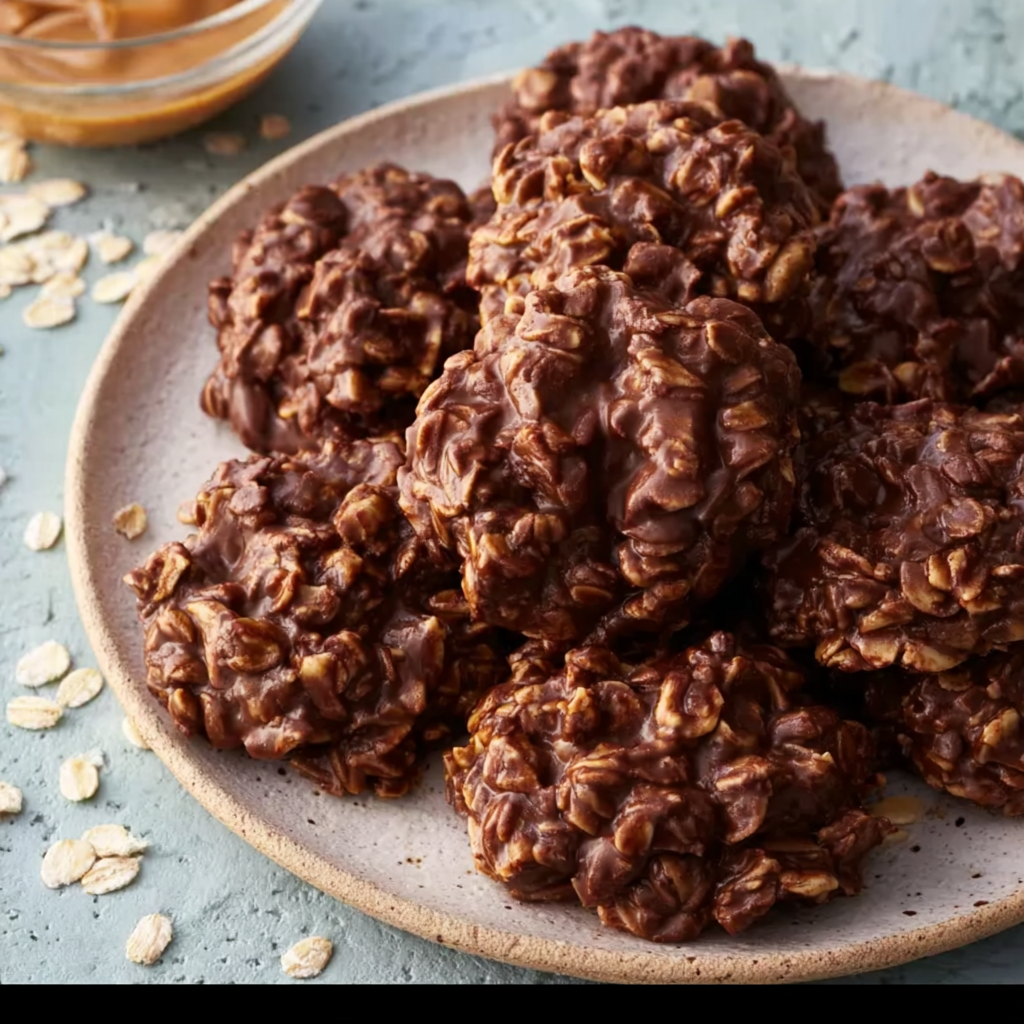
These no-bake oatmeal cookies have a chewy, slightly firm texture that’s balanced by the creamy richness of peanut butter and the boldness of cocoa. The oats give them structure and a wholesome bite, while the peanut butter adds moisture and flavor depth. Enjoy them at room temperature for softness, or chill them for a firmer, fudgier treat.Popular Variations of the Recipe
This classic recipe is just the starting point. You can customize these no-bake cookies in many ways to suit your taste or dietary preferences:- Nut-free: Use sunflower seed butter or cookie butter instead of peanut butter.
- Add-ins: Mix in shredded coconut, chopped nuts, or mini chocolate chips after adding the oats.
- Extra chocolate: Drizzle melted chocolate over the tops once they’ve set.
- Festive flair: Stir in colored sprinkles for a birthday or holiday-themed version.
- With almond butter: Swap peanut butter for almond or cashew butter for a different flavor profile. Learn more about gluten-free baking and substitutions here.
How to Store No-Bake Cookies
Proper storage keeps your cookies fresh, chewy, and ready to enjoy anytime:- At room temperature: Store in an airtight container for up to 4 days. Keep them in a cool, dry place.
- Refrigerator: Extend shelf life to about a week. The texture will become firmer.
- Freezer: Freeze for up to 3 months. Lay flat in a single layer, freeze, then transfer to a freezer-safe container. To thaw, let them sit at room temp for 10–15 minutes.
Common Mistakes & Troubleshooting
Even simple recipes have a learning curve. Here are the most common mistakes and how to fix them:- Cookies didn’t set: Likely caused by not boiling the mixture long enough. Try placing them in the fridge. Next time, ensure a full 1-minute rolling boil.
- Cookies too dry or crumbly: This can happen from overboiling or using too many oats. Stick to the 1-minute boil and measure oats accurately.
- Mixture separates: Could result from high heat or incorrect ingredient ratios. Stir constantly until boiling begins.
How to Serve No-Bake Oatmeal Cookies
These cookies are a classic for a reason—but they can also shine in creative ways:- Classic pairing: Serve with a glass of cold milk or a warm cup of coffee.
- Dessert topping: Crumble over vanilla ice cream or yogurt.
- On a platter: Pair with other no-bake treats or baked cookies for a dessert board.
- Gift idea: Package in treat bags or small boxes for holidays or birthdays.
Are These Cookies Healthy?
While these cookies are indulgent, you can make them more nutritious with a few tweaks:- Cut sugar: Try using 1½ cups sugar or swapping in a natural sweetener like maple syrup or coconut sugar.
- Use natural peanut butter: Contains less added sugar and oils.
- Try oat milk or almond milk: Reduces saturated fat for a lighter cookie.
- Add flaxseed or chia seeds: Boosts fiber and healthy fats.

FAQs – Based on People Also Ask
Why didn’t my no-bake cookies harden? They likely didn’t boil long enough. The sugar mixture must reach the soft-ball stage. Next time, ensure a full 1-minute rolling boil. Can I use rolled oats instead of quick oats? Yes, but the texture will be chewier and more rustic. Quick oats absorb the mixture better for a smoother result. See the Wikipedia page on oats to understand the difference. Are no-bake cookies safe to eat? Absolutely. There’s no raw egg or flour, and boiling the mixture kills any potential bacteria, making them safe for everyone. Can I make these cookies without cocoa? Yes, you can skip the cocoa for a peanut butter version. Add a tablespoon more peanut butter or a splash of maple syrup to enhance the flavor. How long do no-bake cookies need to set? About 30 minutes at room temperature. To speed up the process, chill them in the refrigerator for 10–15 minutes. Can I use almond or cashew butter instead of peanut butter? Definitely. Almond and cashew butter both work well and offer a slightly sweeter, milder flavor. Check the consistency—creamy varieties work best. PrintNo-Bake Oatmeal Cookies with Chocolate & Peanut Butter
These no-bake oatmeal cookies combine the classic flavors of chocolate and peanut butter with the hearty texture of quick oats. Made in just 10 minutes on the stovetop, they’re a perfect quick treat for any occasion—no oven needed.
Ingredients
- ½ cup unsalted butter
- 2 cups granulated sugar
- ½ cup milk
- ¼ cup unsweetened cocoa powder
- ½ cup peanut butter
- 1 tsp vanilla extract
- 3 cups quick-cooking oats
Instructions
In a medium saucepan over medium heat, combine the butter, sugar, milk, and cocoa powder. Stir until the butter melts and the mixture comes to a boil.
Once it reaches a rolling boil, let it boil for 1 minute without stirring.
Remove from heat and quickly stir in the peanut butter and vanilla extract until smooth.
Add the oats and mix until fully combined.
Drop spoonfuls of the mixture onto wax paper or parchment paper.
Let the cookies cool and set at room temperature for about 30 minutes before serving.
Notes
-
Use quick-cooking oats for best results; rolled oats will create a chunkier texture.
-
Always boil the cocoa mixture for exactly 1 minute to help the cookies set properly.
-
For a dairy-free version, substitute butter and milk with plant-based alternatives.
-
Cookies can be stored at room temperature, in the fridge, or frozen for long-term storage.
-
Customize with add-ins like shredded coconut, chopped nuts, or dried fruit.