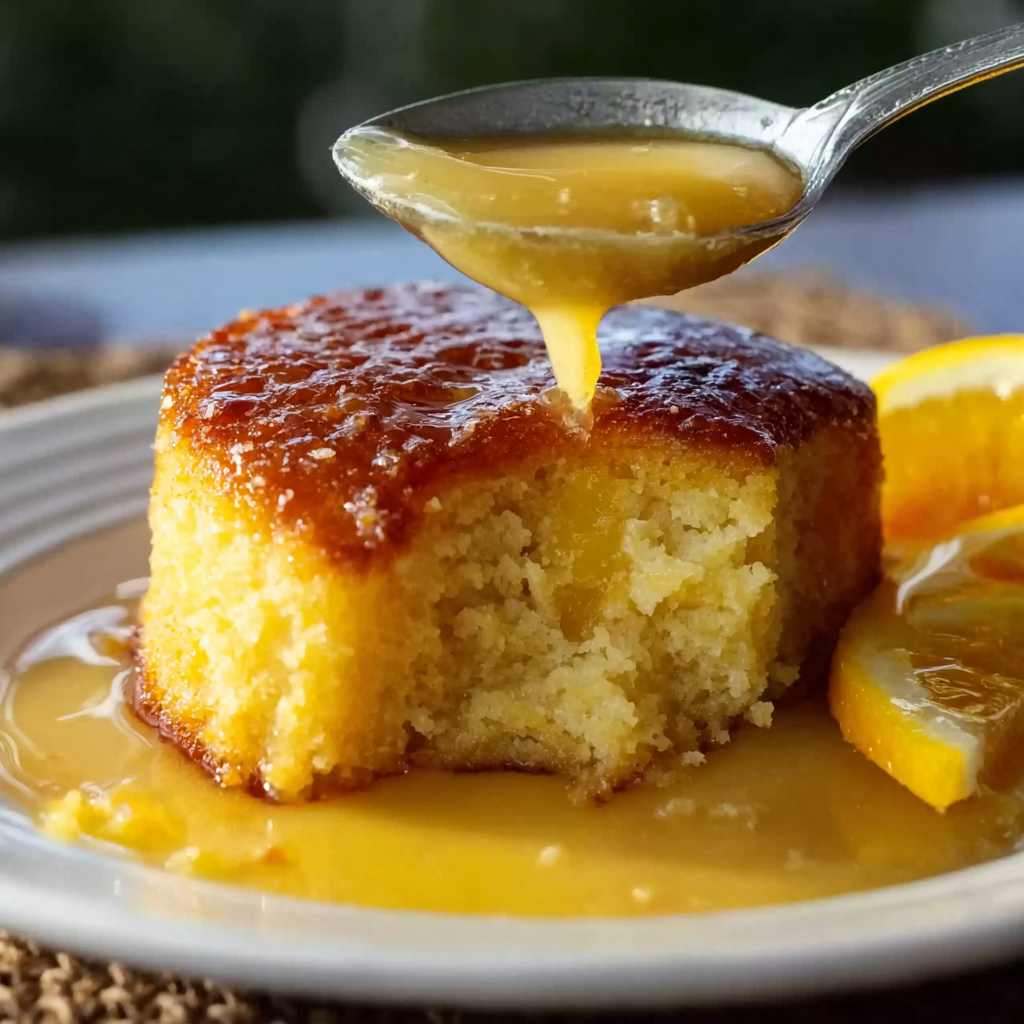

What Is Lemon Self Saucing Pudding?
Lemon Self Saucing Pudding is a wonderfully unique baked dessert that creates its own sauce as it cooks. What starts as a simple batter transforms in the oven into two distinct and delicious layers:
-
A light, fluffy lemon sponge cake on top
-
A silky, tangy lemon sauce underneath
The magic lies in the method. After preparing a smooth lemon batter, a hot mixture of sugar and lemon-infused liquid is gently poured over the top before baking. As the pudding cooks, the liquid gradually sinks to the bottom while the sponge rises to the surface. Through this simple bit of kitchen chemistry, the sauce forms beneath the cake—no stirring, swirling, or complicated techniques required.
When you scoop into it, your spoon breaks through the soft sponge and reveals the bright, luscious sauce hidden below. The contrast between airy cake and warm citrus syrup makes every bite comforting yet refreshing at the same time.
The end result feels elegant enough for dinner parties and holiday gatherings, yet rustic and homestyle enough for a cozy night in. It’s a dessert that looks impressive, tastes vibrant, and proves that sometimes the simplest recipes are the most magical.
Why You’ll Love This Lemon Self Saucing Pudding
There are plenty of reasons this recipe deserves a spot in your dessert rotation:- Bright, fresh lemon flavor that isn’t overly sweet
- Soft, fluffy cake texture
- Buttery, silky citrus sauce
- Simple pantry ingredients
- One-bowl batter
- Elegant presentation with minimal effort
Ingredients You’ll Need
Let’s break down the ingredients that make this pudding so irresistible.For the Lemon Sponge Batter
- 1 cup (200 g) granulated sugar
- ½ cup (115 g) unsalted butter, softened
- 2 large eggs, separated
- 1 tablespoon finely grated lemon zest
- ¼ cup (60 ml) freshly squeezed lemon juice
- 1 cup (125 g) all-purpose flour
- 1 teaspoon baking powder
- ¼ teaspoon salt
- 1 cup (240 ml) whole milk
For the Lemon Sauce Layer
- ½ cup (100 g) granulated sugar
- 1 tablespoon cornstarch
- 1¾ cups (420 ml) boiling water
- ¼ cup (60 ml) freshly squeezed lemon juice
Step-by-Step Instructions
1. Preheat and Prepare
Preheat your oven to 350°F (175°C). Lightly grease a 9-inch (23 cm) baking dish or four individual ramekins.2. Cream Butter and Sugar
In a large mixing bowl, beat together:- ½ cup (115 g) softened unsalted butter
- 1 cup (200 g) granulated sugar
3. Add Egg Yolks and Flavor
Add the egg yolks one at a time, mixing well after each addition. Stir in:- 1 tablespoon lemon zest
- ¼ cup (60 ml) lemon juice
4. Incorporate Dry Ingredients and Milk
Sift together:- 1 cup (125 g) all-purpose flour
- 1 teaspoon baking powder
- ¼ teaspoon salt
- 1 cup (240 ml) whole milk
5. Fold in Egg Whites
In a clean bowl, beat the 2 egg whites until soft peaks form. Carefully fold them into the batter. This step gives the pudding its signature light texture. Spread the batter evenly into your prepared baking dish.6. Prepare the Sauce Mixture
In a small bowl, combine:- ½ cup (100 g) granulated sugar
- 1 tablespoon cornstarch
- 1¾ cups (420 ml) boiling water
- ¼ cup (60 ml) lemon juice
7. Bake to Perfection
Bake for 40–45 minutes, or until the top is golden and set but slightly springy. Let it rest for 10 minutes before serving to allow the sauce to settle beneath the sponge.
The Magic Behind Self Saucing Pudding
During baking, gravity and heat work together. The hot water mixture sinks while the batter rises and sets on top. The cornstarch thickens the liquid into a velvety lemon sauce. The contrast between the fluffy sponge and silky sauce is what makes this dessert so satisfying. Every spoonful delivers cake and sauce together.Tips for Perfect Results
Use fresh lemons. Bottled juice won’t deliver the same vibrant flavor. Don’t overmix. Gentle folding keeps the sponge light. Pour liquid carefully. Always pour the hot liquid over the back of a spoon to avoid disturbing the batter. Serve warm. The sauce is most luscious while still warm from the oven.Serving Suggestions
Lemon Self Saucing Pudding is delightful on its own, but you can elevate it further:- A scoop of vanilla ice cream
- Fresh whipped cream
- A light dusting of powdered sugar
- Extra lemon zest for garnish
- Fresh berries for contrast
Storage and Reheating
Store leftovers covered in the refrigerator for up to 3 days. To reheat:- Microwave individual portions for 30–45 seconds
- Or warm in a 300°F (150°C) oven until heated through
Frequently Asked Questions
1. Why didn’t my pudding form a sauce layer?
If your pudding didn’t develop a sauce layer underneath, a few things may have gone wrong. First, ensure you used the full amount of boiling water—1¾ cups (420 ml). The liquid is essential for forming the sauce. Second, avoid stirring after pouring the liquid on top. The layering works because the liquid sits above the batter and sinks naturally during baking. Finally, make sure your oven temperature is accurate. An oven that’s too hot may set the cake too quickly, preventing proper separation. Using fresh cornstarch is also important, as it thickens the sauce effectively during baking.2. Can I make Lemon Self Saucing Pudding ahead of time?
Yes, but it’s best enjoyed fresh and warm. You can prepare the batter a few hours ahead and keep it refrigerated before baking. However, once baked, the texture is at its peak within the first hour. If making ahead for guests, bake it shortly before serving and keep it warm in a low oven. Reheating works well, but the sponge may lose a bit of its initial fluffiness. The sauce will still taste wonderful after reheating.3. Can I make this recipe gluten-free?
Absolutely. Substitute the 1 cup (125 g) all-purpose flour with a 1:1 gluten-free baking flour blend that contains xanthan gum. Make sure your baking powder is certified gluten-free. The texture may be slightly different—perhaps a bit denser—but the flavor and sauce layer will remain delicious. Avoid almond flour alone, as it doesn’t provide the same structure needed for the sponge layer.4. Can I adjust the sweetness or lemon flavor?
Yes. If you prefer a tarter dessert, reduce the sugar in the batter by 2 tablespoons (25 g) or increase the lemon juice by 1–2 tablespoons (15–30 ml). For a sweeter pudding, add an extra 2 tablespoons (25 g) sugar to the batter. Keep in mind that the sauce layer provides much of the sweetness balance, so adjust gradually. Taste your lemons before juicing—some are naturally more tart than others.