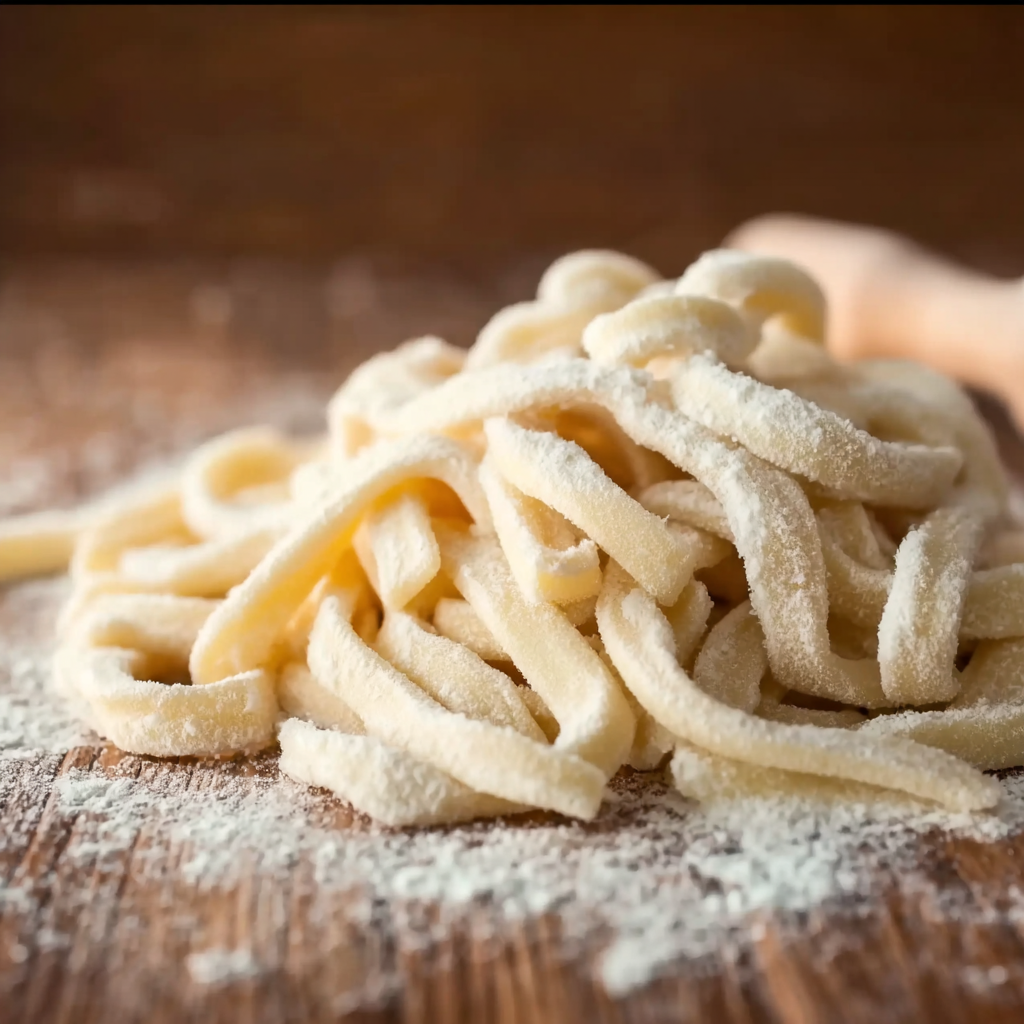
There is something deeply comforting about making food from scratch, especially when it fills the kitchen with warmth and a sense of tradition. Homemade egg noodles are one of those timeless recipes that instantly transform a simple meal into something special. Whether served in a hearty soup on a chilly evening or tossed with vegetables and sauce for a quick family dinner, these soft, tender noodles bring homemade flavor that store-bought pasta simply cannot match.
For many families, fresh noodles carry memories of grandparents rolling dough at the kitchen table or preparing large batches during holidays and gatherings. This recipe captures that nostalgic charm while keeping the process simple and approachable. With just a handful of pantry staples—flour, eggs, salt, and a little oil—you can create delicious homemade noodles that elevate any meal. Once you learn how easy it is to make fresh pasta at home, it may become a regular tradition in your kitchen.

Why You’ll Love Homemade Egg Noodles
Homemade egg noodles are beloved for their rich flavor and soft texture. Unlike dried pasta, fresh noodles cook quickly and absorb sauces beautifully. Here are a few reasons this recipe stands out:
-
Simple ingredients – only a few everyday staples are needed
-
Quick preparation – the dough comes together in minutes
-
Versatile – perfect for soups, stir-fries, casseroles, or creamy pasta dishes
-
Family friendly – a fun recipe to make together in the kitchen
-
Better texture – tender and slightly chewy noodles that taste freshly made
Once you master the basics of egg noodle dough, you can adjust the thickness and shape to suit your favorite recipes.
Ingredients for Homemade Egg Noodles
This recipe uses pantry staples you likely already have at home. The key is using fresh eggs and measuring the flour correctly.
Ingredients
-
2 cups all-purpose flour (240 g)
-
3 large eggs
-
1 tablespoon vegetable oil
-
1/2 teaspoon salt
-
1–2 tablespoons water (15–30 ml), if needed
Optional for dusting
-
2 tablespoons additional flour (15 g)
These ingredients create a soft dough that rolls easily and cooks into tender noodles.
Kitchen Tools You’ll Need
While specialized pasta machines can make the process faster, homemade egg noodles require only a few basic kitchen tools:
-
Mixing bowl
-
Fork or whisk
-
Clean work surface
-
Rolling pin
-
Sharp knife or pizza cutter
-
Large pot for cooking
Keeping the process simple makes this recipe perfect for beginners.
How to Make Homemade Egg Noodles
Making egg noodles from scratch may sound complicated, but the process is actually very straightforward. Follow these simple steps.
Step 1: Prepare the Dough
In a large mixing bowl, combine 2 cups (240 g) all-purpose flour and 1/2 teaspoon salt.
Make a small well in the center of the flour mixture. Add:
-
3 large eggs
-
1 tablespoon vegetable oil
Use a fork to gently whisk the eggs while gradually pulling flour from the edges into the center.
Continue mixing until the dough begins to form a soft ball. If the dough seems too dry, add 1 tablespoon water (15 ml) at a time until it holds together.
Step 2: Knead the Dough
Transfer the dough to a lightly floured surface.
Knead for 5–8 minutes, folding and pressing the dough until it becomes smooth and elastic. If the dough sticks, lightly dust with flour.
Kneading develops the structure of the noodles and ensures they hold their shape when cooked.
Step 3: Let the Dough Rest
Wrap the dough in plastic wrap or cover it with a bowl. Let it rest for 20–30 minutes at room temperature.
This resting period relaxes the gluten, making the dough easier to roll.
Step 4: Roll the Dough
Divide the dough into two portions.
Using a rolling pin, roll one portion on a lightly floured surface until it is about 1/8 inch (3 mm) thick.
For thinner noodles, roll slightly thinner.
Step 5: Cut the Noodles
Lightly dust the rolled dough with flour to prevent sticking.
Roll the sheet loosely like a log and cut strips using a sharp knife.
Typical noodle widths include:
-
1/4 inch (6 mm) for classic egg noodles
-
1/8 inch (3 mm) for thinner noodles
Unroll the strips and spread them out on the counter.
Step 6: Dry the Noodles
Let the noodles rest for 15–20 minutes before cooking.
This brief drying helps them maintain their shape and texture.

How to Cook Fresh Egg Noodles
Fresh egg noodles cook much faster than dried pasta.
-
Bring a large pot of water to a boil.
-
Add 1 teaspoon salt to the water.
-
Add the noodles and stir gently.
-
Cook for 2–4 minutes, depending on thickness.
The noodles are ready when they float and become tender.
Drain and serve immediately with your favorite sauce or broth.
Serving Ideas for Homemade Egg Noodles
These noodles are incredibly versatile and can be used in many dishes. Some popular serving ideas include:
1. Classic Soup Noodles
Add freshly cooked noodles to chicken or vegetable soup for a comforting meal.
2. Buttered Herb Noodles
Toss noodles with 2 tablespoons butter (28 g) and fresh herbs like parsley or basil.
3. Vegetable Stir-Fry Noodles
Combine noodles with sautéed vegetables, garlic, and a light sauce.
4. Creamy Pasta Bowl
Serve with a creamy garlic sauce and roasted vegetables.
Because these noodles absorb flavors so well, they work beautifully in both simple and rich dishes.
Tips for Perfect Homemade Egg Noodles
Even simple recipes benefit from a few helpful tips.
Use fresh eggs
Fresh eggs improve both flavor and texture.
Measure flour correctly
Too much flour can make the dough stiff. Spoon flour into the measuring cup and level it.
Rest the dough
Skipping the resting time makes rolling more difficult.
Keep surfaces lightly floured
This prevents sticking without making the dough dry.
Do not overcook
Fresh noodles cook quickly and should remain tender.
How to Store Homemade Egg Noodles
Fresh noodles can be stored in several ways depending on how soon you plan to use them.
Refrigerator
Place noodles in an airtight container and store for up to 2 days.
Freezer
Freeze noodles on a baking sheet until firm, then transfer to a freezer bag. Store up to 2 months.
Cook frozen noodles directly from the freezer without thawing.
Drying
You can also air-dry noodles for several hours until completely firm and store them in an airtight container.
Common Mistakes to Avoid
Making fresh noodles is easy, but a few mistakes can affect the final result.
Using too much flour
This creates dense noodles.
Rolling uneven thickness
Uneven noodles cook inconsistently.
Skipping the resting step
Resting ensures the dough rolls smoothly.
Overcrowding the pot
Cook noodles in a large pot so they have space to move.
Avoiding these issues ensures tender, flavorful noodles every time.
Frequently Asked Questions
1. Can I make homemade egg noodles without a pasta machine?
Yes, and this recipe is designed specifically for that purpose. A pasta machine can speed up the rolling process, but it is absolutely not required. A simple rolling pin works perfectly well. The key is to roll the dough evenly until it reaches about 1/8 inch (3 mm) thickness. If you prefer thinner noodles, continue rolling until the sheet becomes slightly thinner but still easy to handle.
Once rolled, simply dust the dough lightly with flour, roll it loosely into a log, and cut it into strips using a sharp knife or pizza cutter. After cutting, gently separate the strands and allow them to rest before cooking. Many home cooks actually prefer this traditional method because it allows for rustic, slightly irregular noodles that feel more homemade and authentic.
2. What type of flour works best for egg noodles?
All-purpose flour is the most common and convenient choice for homemade egg noodles. It provides the right balance of protein and softness, creating noodles that are tender but still strong enough to hold their shape.
However, you can experiment with other flours if desired. Bread flour contains more protein and will produce slightly firmer noodles with more chew. Some cooks like to substitute a small portion of the all-purpose flour with whole wheat flour for a nuttier flavor and extra fiber. If you do this, replace about 1/4 cup (30 g) of the flour with whole wheat flour while keeping the rest all-purpose.
No matter which flour you use, the most important factor is achieving a dough that is smooth, soft, and easy to roll.
3. Can homemade egg noodles be made ahead of time?
Yes, homemade egg noodles are great for preparing in advance. Once cut, the noodles can be stored in several ways depending on when you plan to use them.
For short-term storage, place them in an airtight container and refrigerate for up to two days. If you want to store them longer, freezing is the best option. Spread the noodles on a baking sheet and freeze them until firm. Then transfer them to a freezer-safe bag or container.
Frozen noodles cook just like fresh ones. Simply add them directly to boiling water and cook for an additional minute if needed. This makes homemade noodles convenient even for busy weeknight meals.
4. Why are my homemade noodles tough instead of tender?
Tough noodles are usually caused by either too much flour or over-kneading the dough. When the dough contains too much flour, the noodles become dense and firm rather than soft and tender. Always measure flour carefully and add water gradually if the dough feels dry.
Another important factor is resting the dough. Allowing the dough to rest for 20–30 minutes relaxes the gluten and makes it easier to roll thinly. Skipping this step can lead to stiff dough that produces tougher noodles.
Finally, avoid overcooking. Fresh noodles only need 2–4 minutes in boiling water. Cooking them longer can affect their texture.

Final Thoughts
Homemade egg noodles represent the beauty of simple cooking. With only a handful of ingredients and a little time, you can create something far more flavorful and satisfying than packaged pasta. The process itself is rewarding, from kneading the dough to rolling it out and slicing it into delicate strands.
What makes this recipe especially appealing is its flexibility. These noodles can be used in countless dishes, from comforting soups to quick skillet meals filled with vegetables. Their soft texture and rich egg flavor allow them to complement both light and hearty sauces. Once you taste fresh noodles, it becomes easy to understand why so many traditional cuisines continue to rely on homemade pasta.
Another wonderful aspect of this recipe is the opportunity it creates for sharing time in the kitchen. Rolling dough and cutting noodles can easily become a family activity, bringing people together in a way that store-bought ingredients rarely do. Many cooks find that preparing noodles by hand connects them to older culinary traditions and techniques that have been passed down through generations.
If you are new to making pasta from scratch, this recipe is an excellent place to start. It requires no special equipment and uses ingredients you likely already have in your pantry. After making it once or twice, the process becomes quick and intuitive. You may even begin experimenting with different shapes, thicknesses, or serving styles.
Fresh egg noodles also make meals feel special without adding complexity. Whether served in a warm bowl of soup on a cool evening or paired with sautéed vegetables for a quick dinner, they bring a comforting homemade touch to the table.
Give this recipe a try the next time you want to cook something simple yet memorable. Once you experience the flavor and texture of freshly made noodles, they may quickly become a favorite staple in your kitchen.
PrintBest Homemade Egg Noodles – Simple From Scratch Recipe
Homemade egg noodles are soft, tender, and full of flavor, made easily with simple pantry staples. They cook quickly and work perfectly in soups, vegetable dishes, or comforting pasta meals.
Ingredients
Fresh homemade egg noodles are tender, flavorful, and easy to prepare using simple pantry ingredients. These versatile noodles cook quickly and are perfect for soups, vegetable dishes, and comforting pasta meals.
Instructions
-
In a mixing bowl, combine 2 cups (240 g) all-purpose flour and 1/2 teaspoon salt.
-
Create a well in the center and add 3 large eggs and 1 tablespoon vegetable oil.
-
Mix with a fork, gradually incorporating the flour until a dough forms.
-
If the dough is dry, add 1 tablespoon water (15 ml) at a time until it comes together.
-
Transfer the dough to a lightly floured surface and knead for 5–8 minutes until smooth.
-
Cover the dough and let it rest for 20–30 minutes at room temperature.
-
Divide the dough in half and roll each portion to about 1/8 inch (3 mm) thickness.
-
Lightly dust the dough with flour and roll it loosely into a log.
-
Cut into strips about 1/4 inch (6 mm) wide for classic egg noodles.
-
Unroll the strips and allow them to rest for 15–20 minutes before cooking.
-
Bring a large pot of salted water to a boil and cook the noodles for 2–4 minutes until tender.
-
Drain and serve with your favorite sauce or add to soups.
Notes
Allowing the dough to rest makes it easier to roll thinly and prevents tough noodles.
Fresh noodles cook very quickly, so watch them carefully to avoid overcooking.
For storage, refrigerate noodles for up to 2 days or freeze for up to 2 months.